
Crimp terminals for
Püplichhuisen – Your reliable partner
for cable connections.
Crimp terminals – secure
and solderless cable connections.
Crimp connectors enable a stable and reliable connection between cables and electrical components – without the need for soldering. They are used in electrical installations, control cabinet construction, the automotive and transport industries, and mechanical engineering.
At Püplichhuisen, you’ll find a wide range of ring, spade and pin cable lugs, as well as butt, parallel and end connectors – in both insulated and uninsulated versions.
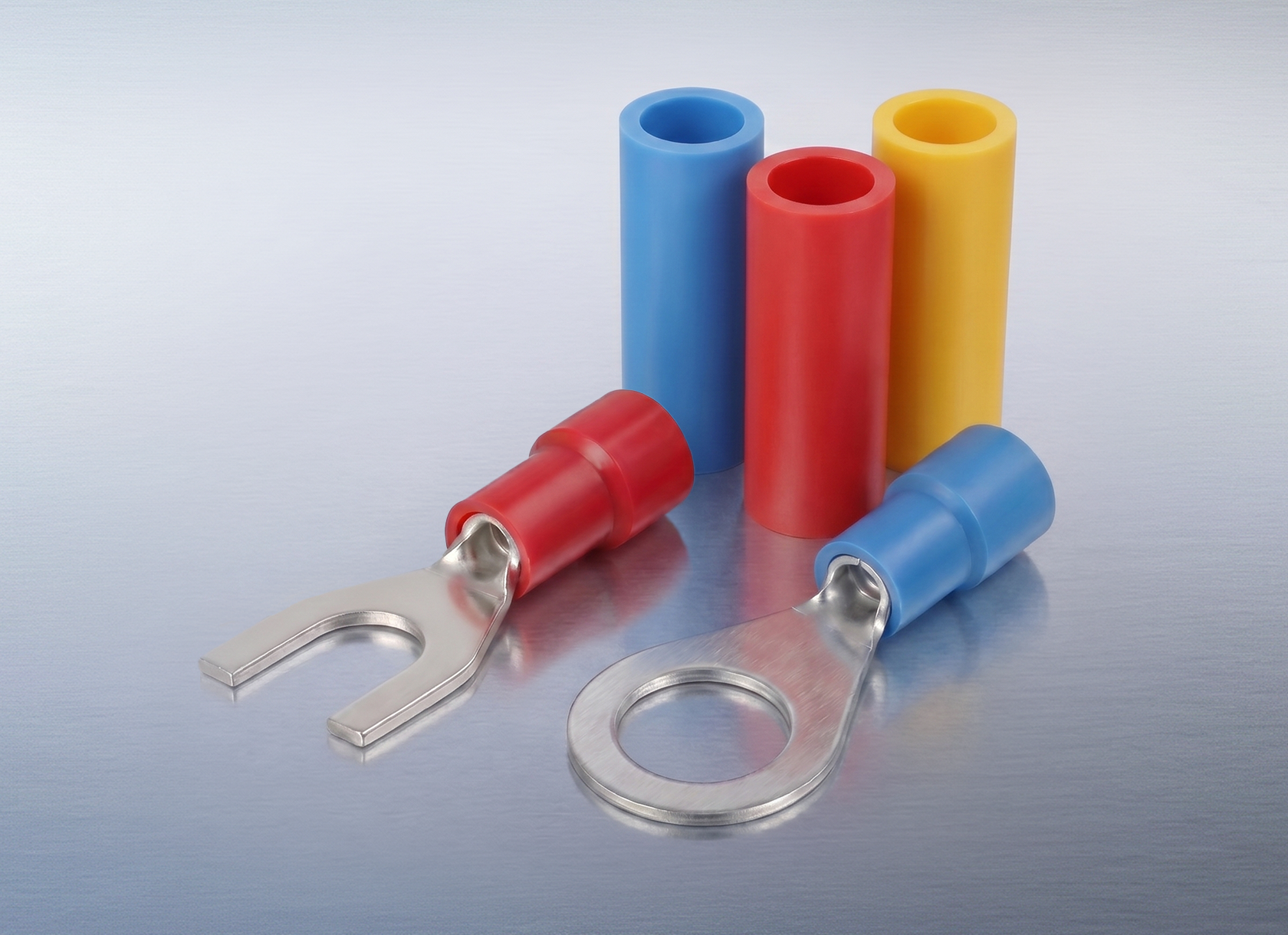
Advantages of crimp terminals.
- Solderless, secure connection technology
-
High reliability, even with vibrations and mechanical stress
-
Suitable for stranded, fine-stranded and superfine-stranded conductors (classes 2, 5 and 6)
-
Made from high-quality electrolytic copper, electro-tinned for optimal corrosion protection
Variations of
Crimp terminals
at Püplichhuisen.
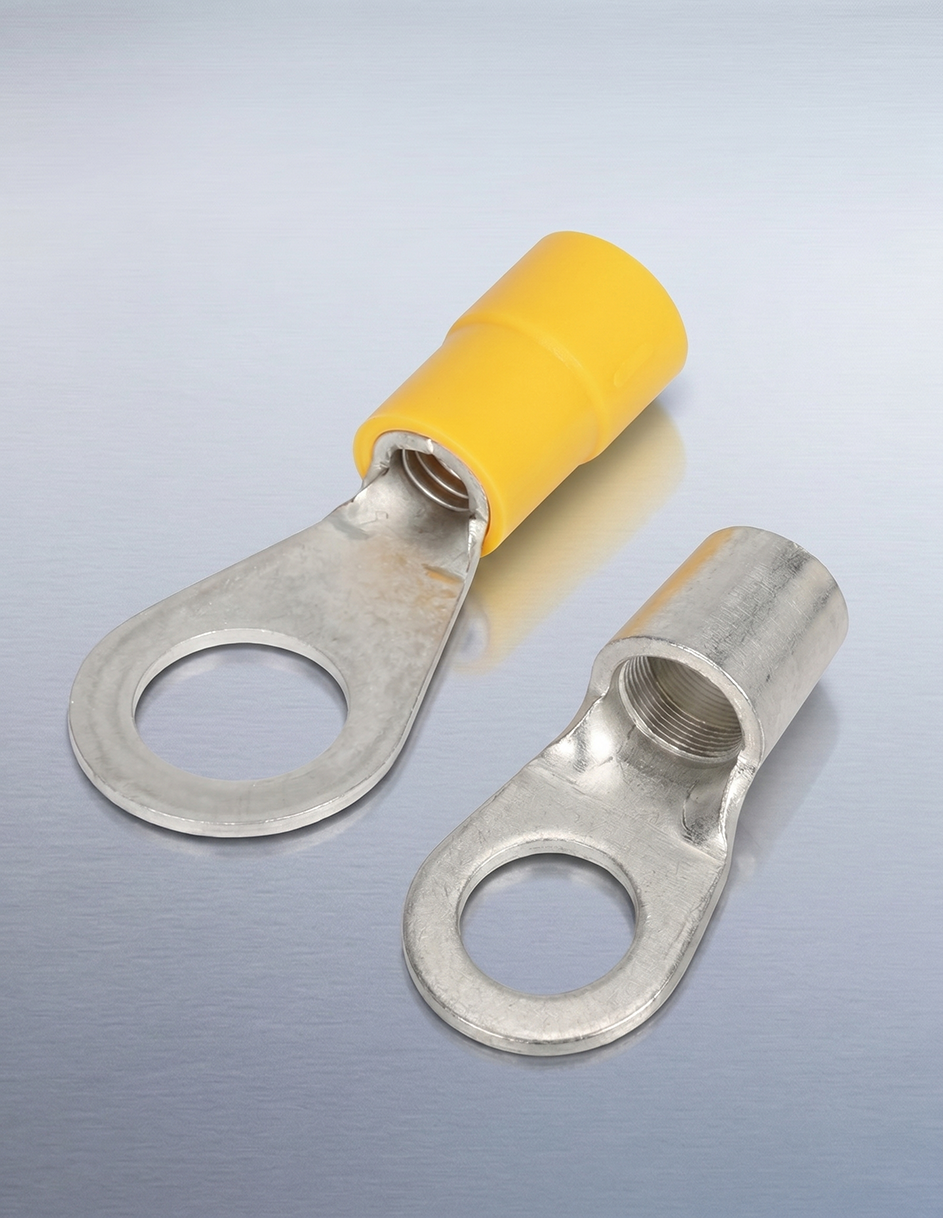
Ring shape
Crimp terminals.
-
Ring terminal according to DIN 46234 (uninsulated)
-
Ring terminal according to DIN 46237 (insulated)
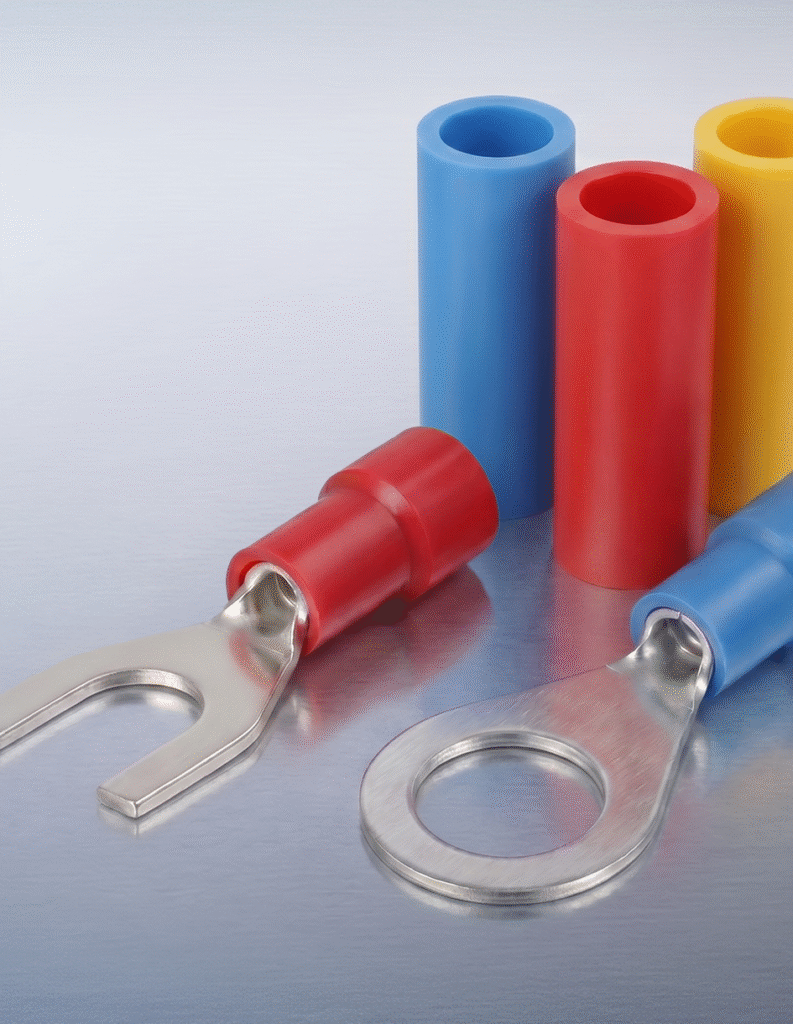
Ring terminals provide maximum safety thanks to their closed eyelet design. They are particularly suitable for securely screwed connections and are preferably used in control cabinet construction or machine installations.

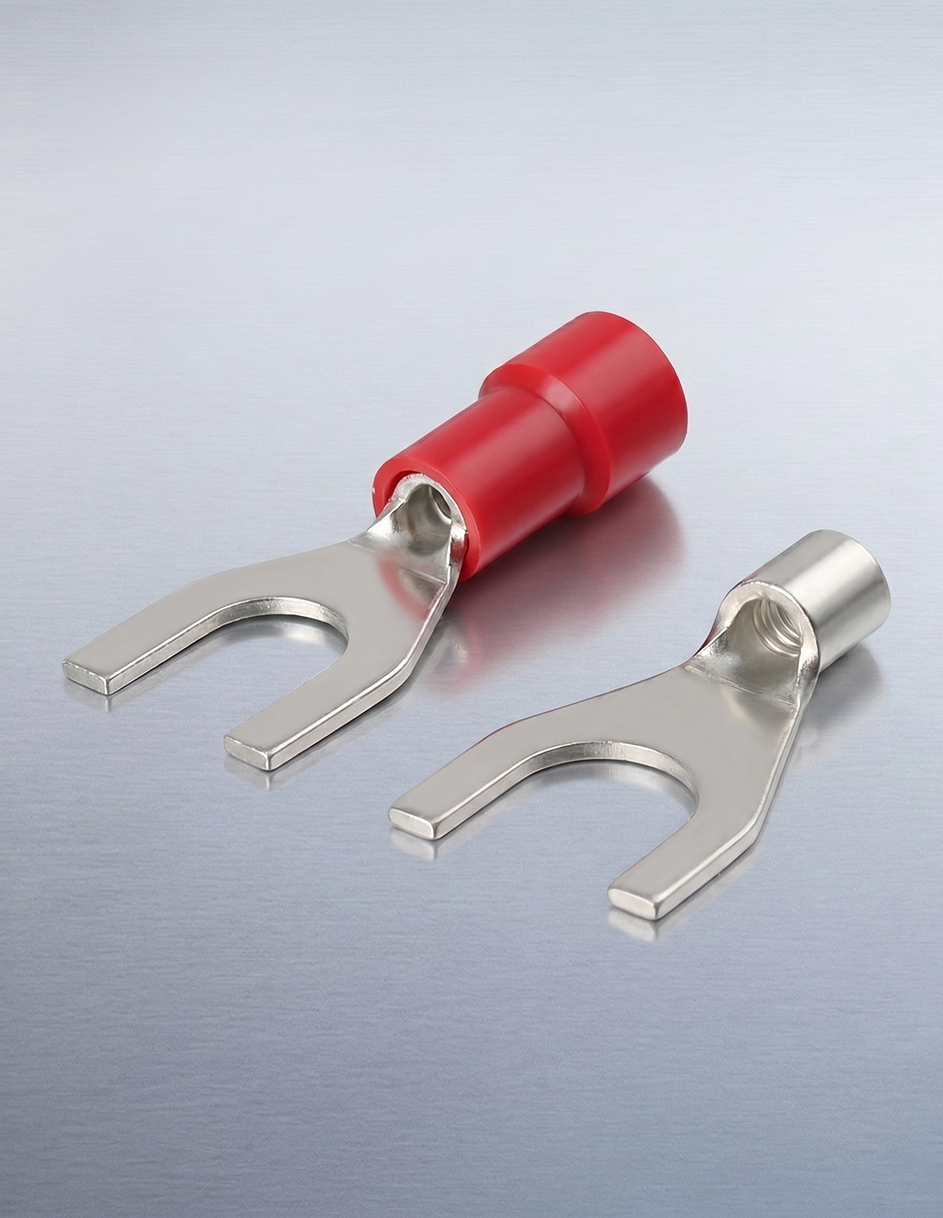
Fork shape
Crimp terminals.
-
Fork terminal according to DIN 46234 (uninsulated)
-
Fork terminal according to DIN 46237 (insulated)
Fork connectors can be fitted quickly and easily as the screw does not need to be completely loosened. Ideal for applications requiring frequent maintenance or in hard-to-reach connections.
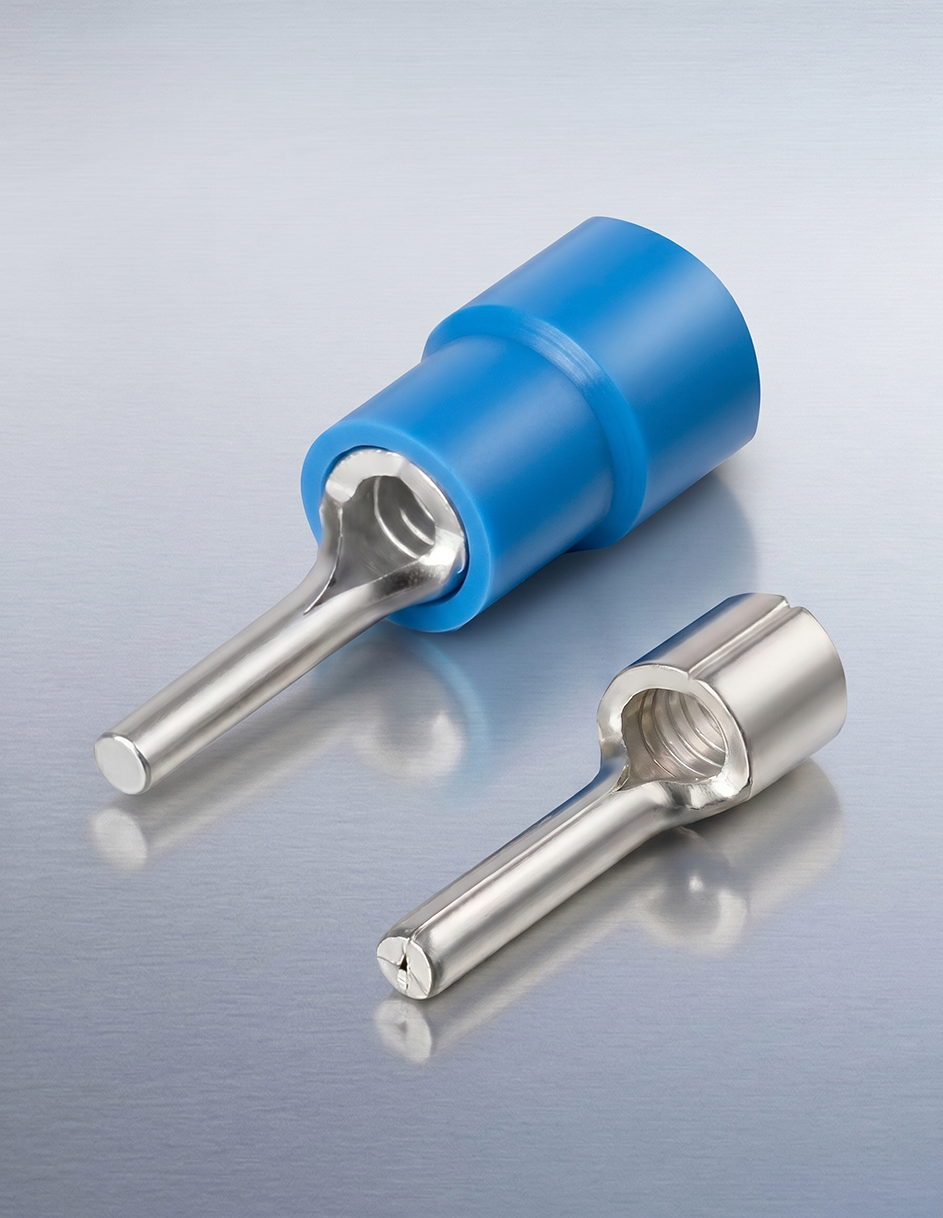
Pencil shape
Crimp terminals.
- Pen shape according to DIN 46230 (uninsulated)
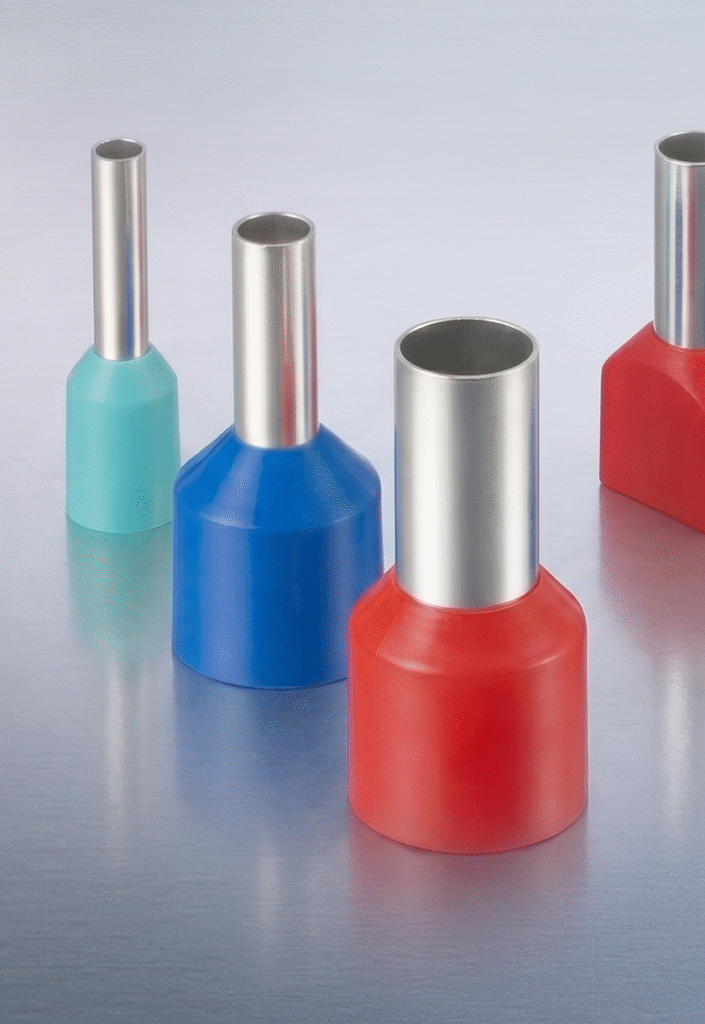
- Sleeve shape according to DIN 46231 (insulated)
Pin-type cable lugs are suitable for terminals and connectors where cables need to be reliably inserted and fixed. Particularly space-saving and versatile in
Butt, parallel and end connectors –
insulated and uninsulated.
In addition to the standard cable lug variants, Püplichhuisen also offers other types of connectors:
-
Butt connector: for extending cables
-
Parallel connector: for parallel line connections
-
End connectors: for the secure termination of conductors
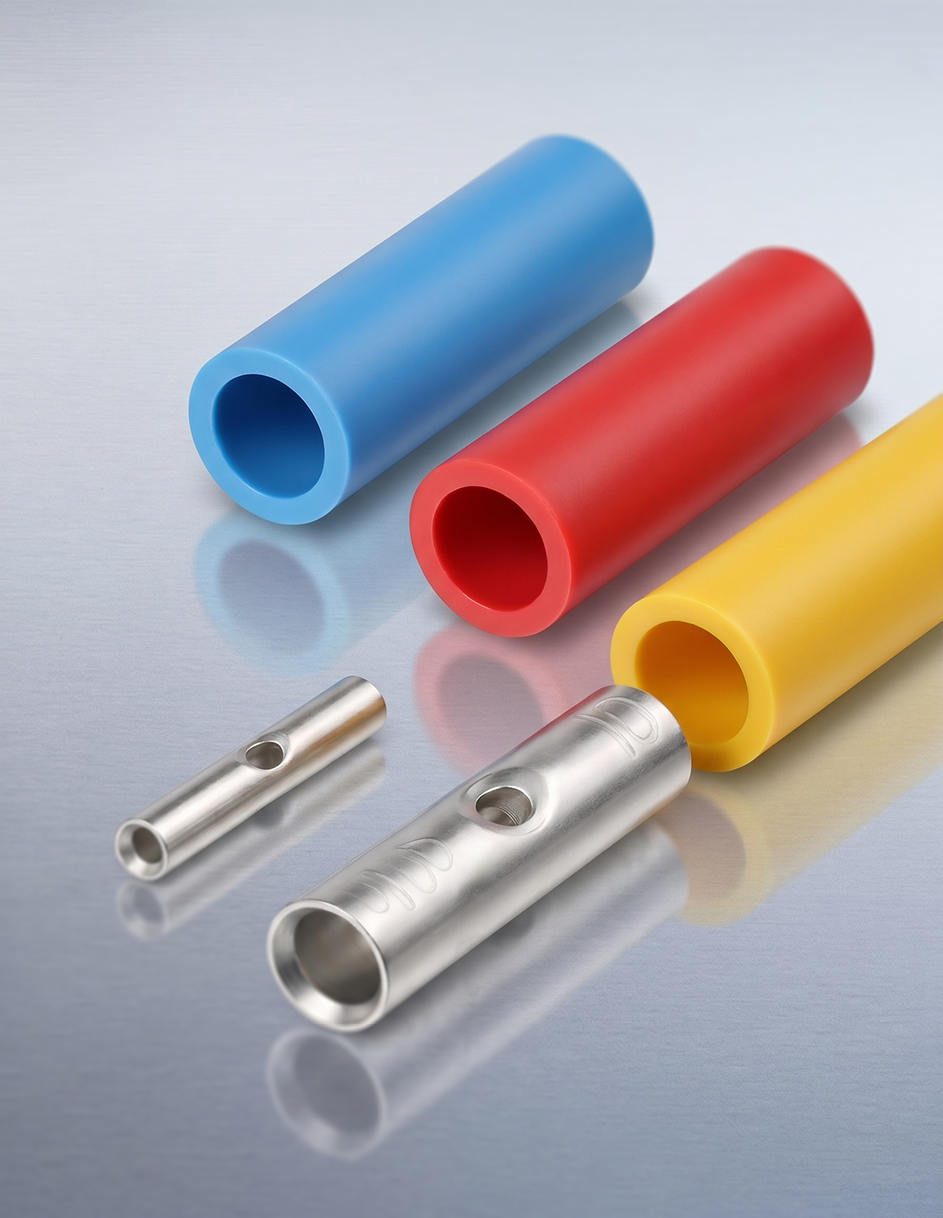
Types of crimp connectors.
The crucial factor here is whether they are designed as insulated or uninsulated. Both versions are standardised according to DIN and cover different areas of application.
Uninsulated Crimp Terminals
according to DIN 46234.
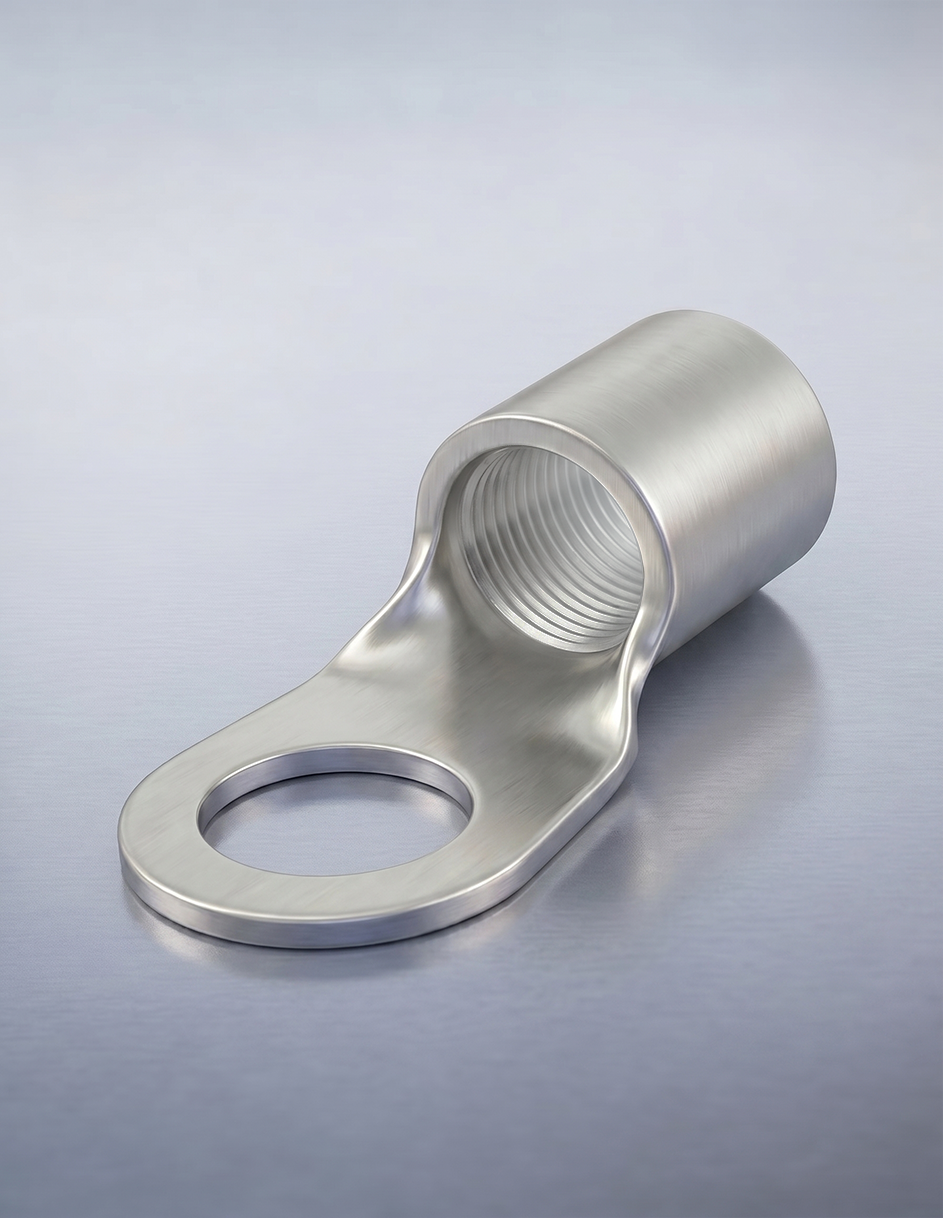
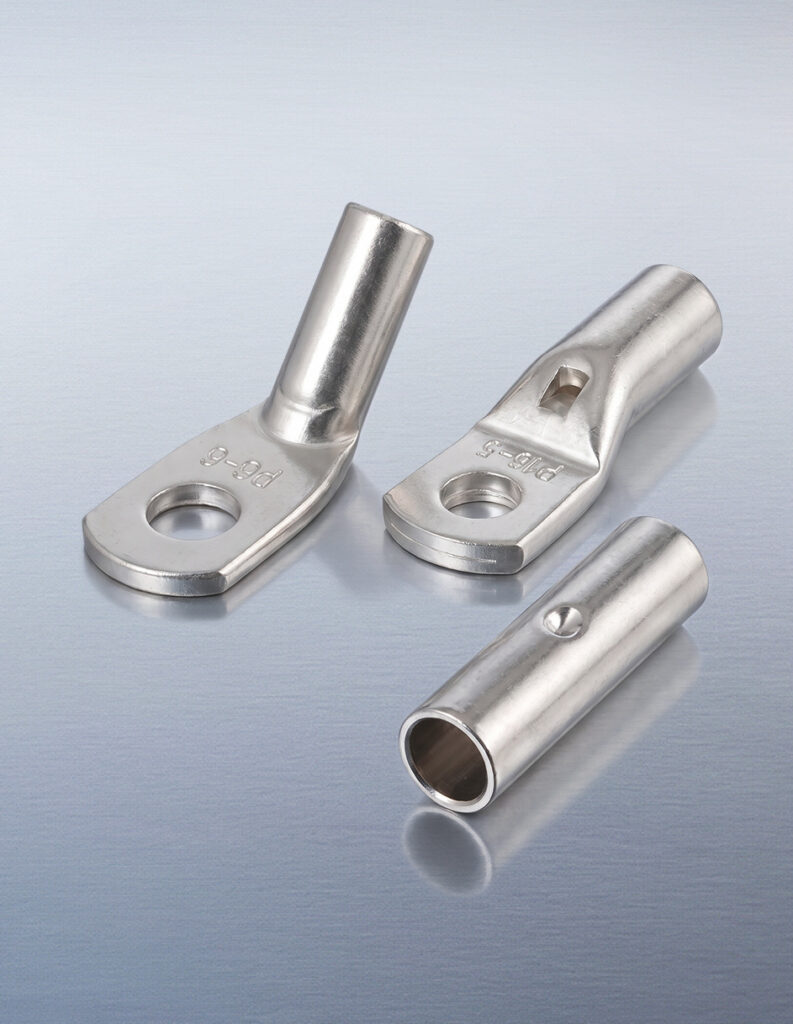
These cable lugs are standardised according to DIN 46234. Manufacturer's marks and cross-section are embossed on the sleeve, which facilitates professional processing.
-
Conductor cross-sections: 0.5 – 240 mm²
-
Drill diameter: M2 – M16
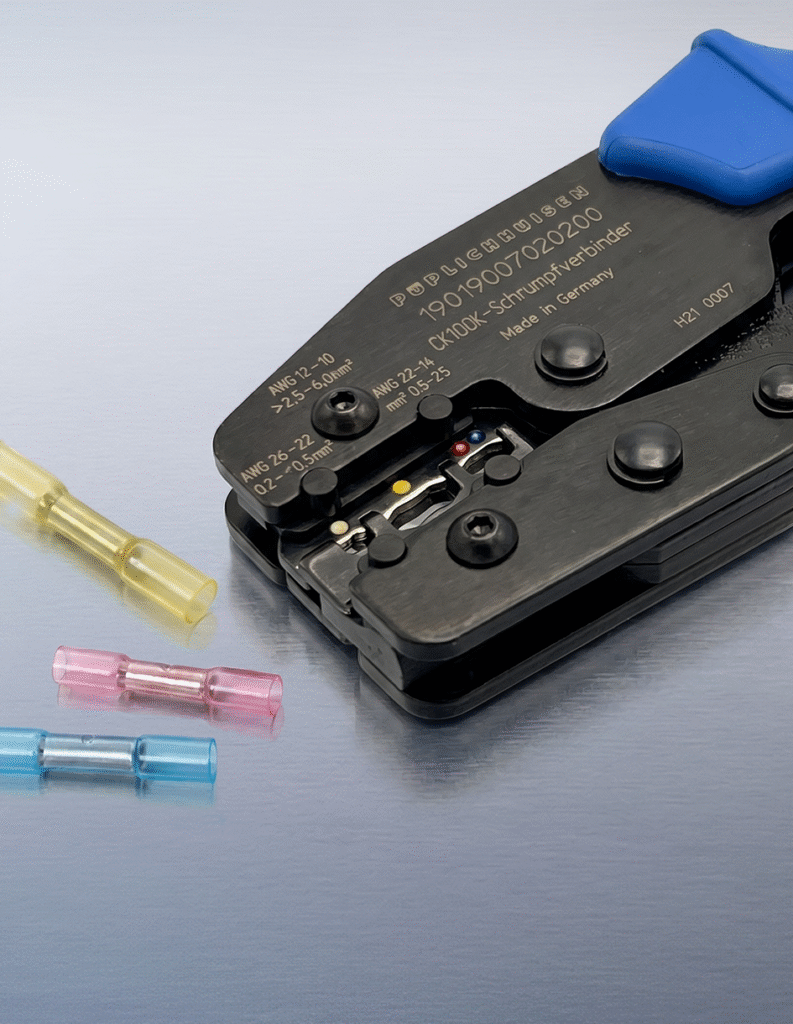
For additional protection, uninsulated models can be fitted with shrink tubing, which improves kink protection and break resistance.
Insulated crimp terminals
according to DIN 43237.
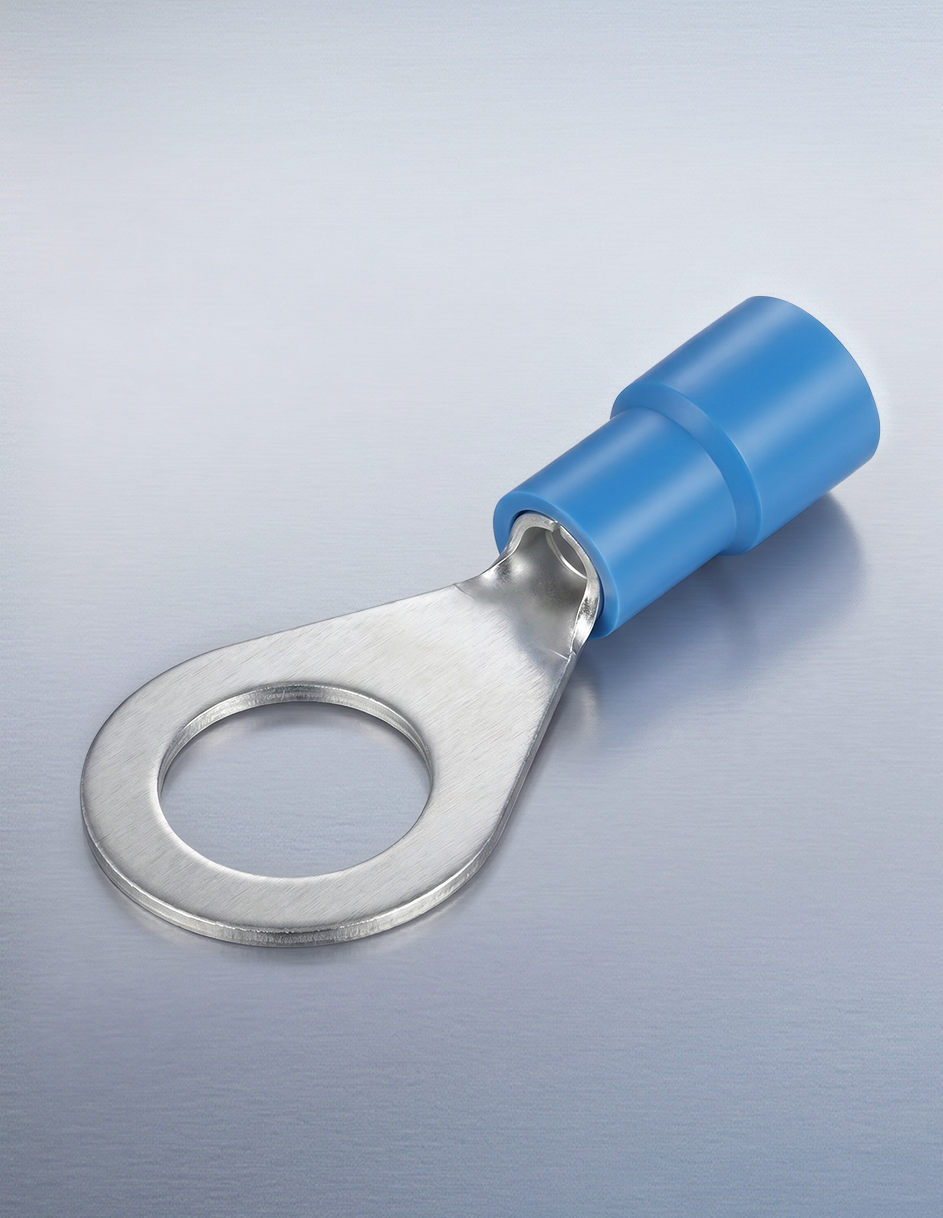
Isolated models are standardised according to DIN 43237 and are marked with a colour code indicating the cross-section:
-
0.5 – 1.5 mm²
-
Blue: 1.5 – 2.5 mm²
-
Yellow: 2.5 – 6 mm²
Thanks to „easy-entry“ sleeves, conductors can be inserted particularly easily – even with thicker cable insulation.
Suitable processing tools
for crimp terminals.
For the processing of crimp cable lugs, different techniques and tools are used depending on the application:
-
Cutting cables to the correct length
-
Stripping the conductor ends for a clean contact surface
-
Crimping for a secure connection of cable and cable lug
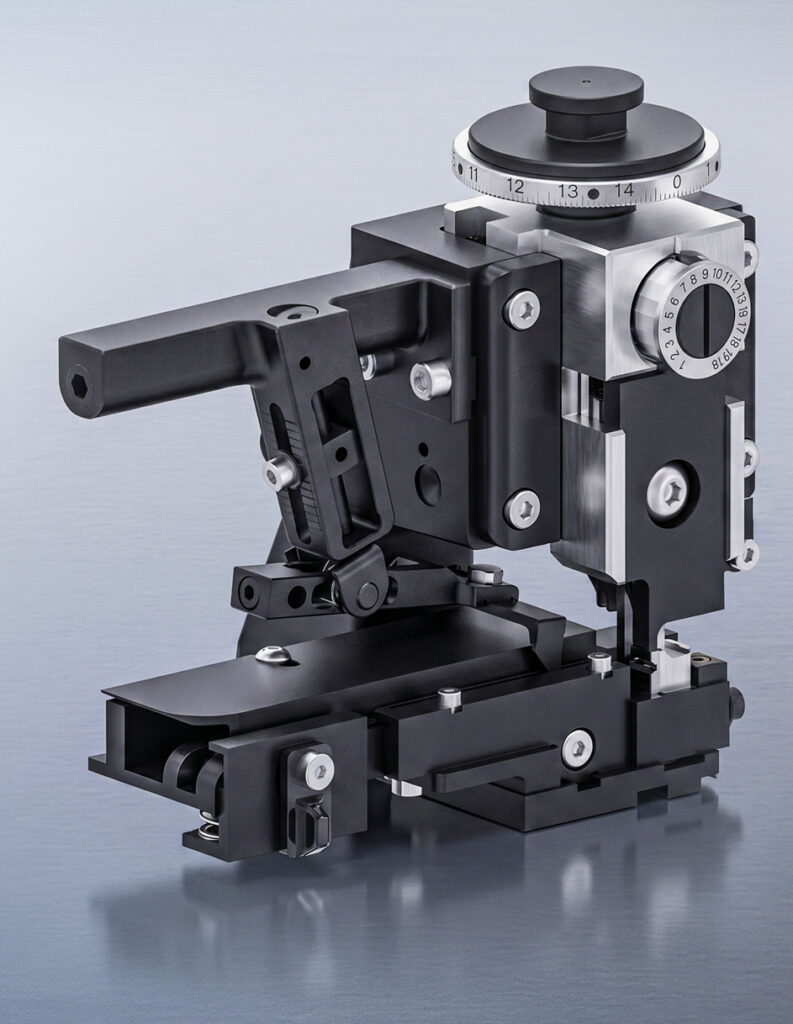
These steps can be carried out using hand tools, hydraulic tools or automated solutions for high-volume processing. At Püplichhuisen, we provide comprehensive advice and offer the appropriate processing tools as part of our service.
Our Partners.
When it comes to distribution, we deliberately focus on a curated brand portfolio, reliably tested quality and in-depth technical expertise, ensuring that components are available quickly and integrate seamlessly into your applications. The range extends from connectors, crimp contacts and ferrule sleeves, through cable protection and marking, to fastening technology, assembly tools and interfaces for automation – all efficiently sourced from a single supplier and reliably implemented.
























Our
Product catalogues.
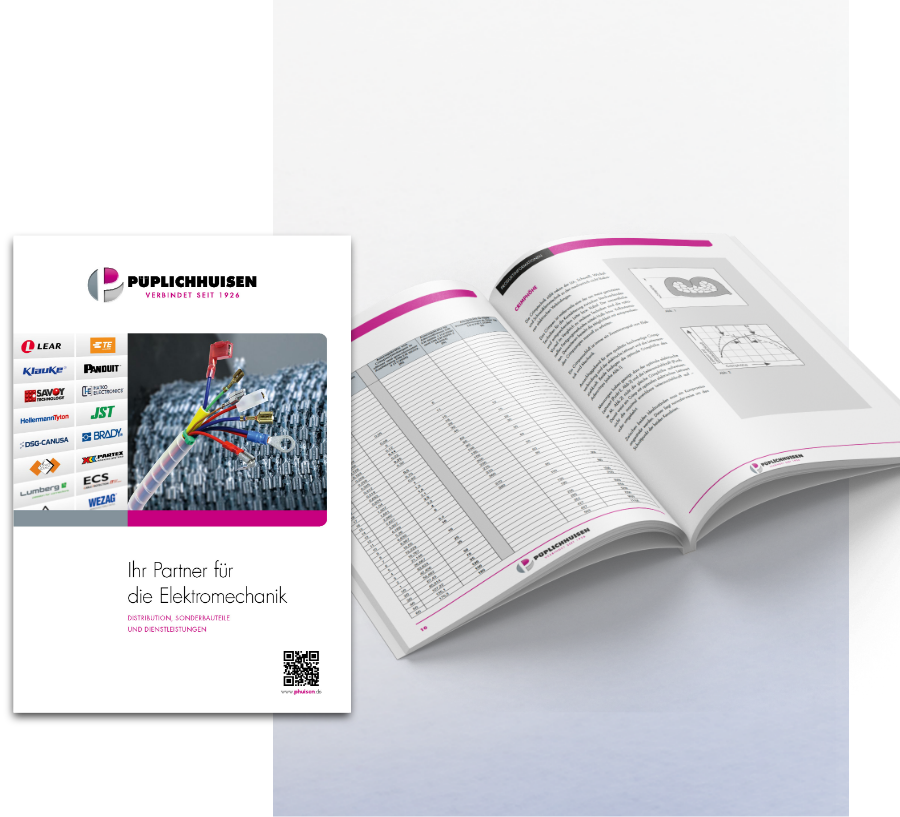
All product catalogues, series overviews and data sheets from Püplichhuisen in one place – always up to date. With technical specifications, standards and ordering information as PDFs for direct download. Ideal for purchasing, development and production.
Your path to becoming a distributor
for crimp terminals.
Whether ring-shaped, fork-shaped, pin-shaped or connectors – at Püplichhuisen you can find high-quality crimp terminals from leading manufacturers, compliant with DIN standards. The right tools and accessories round off our range.

All product groups.

Electronics
Connectors and
Connector
system
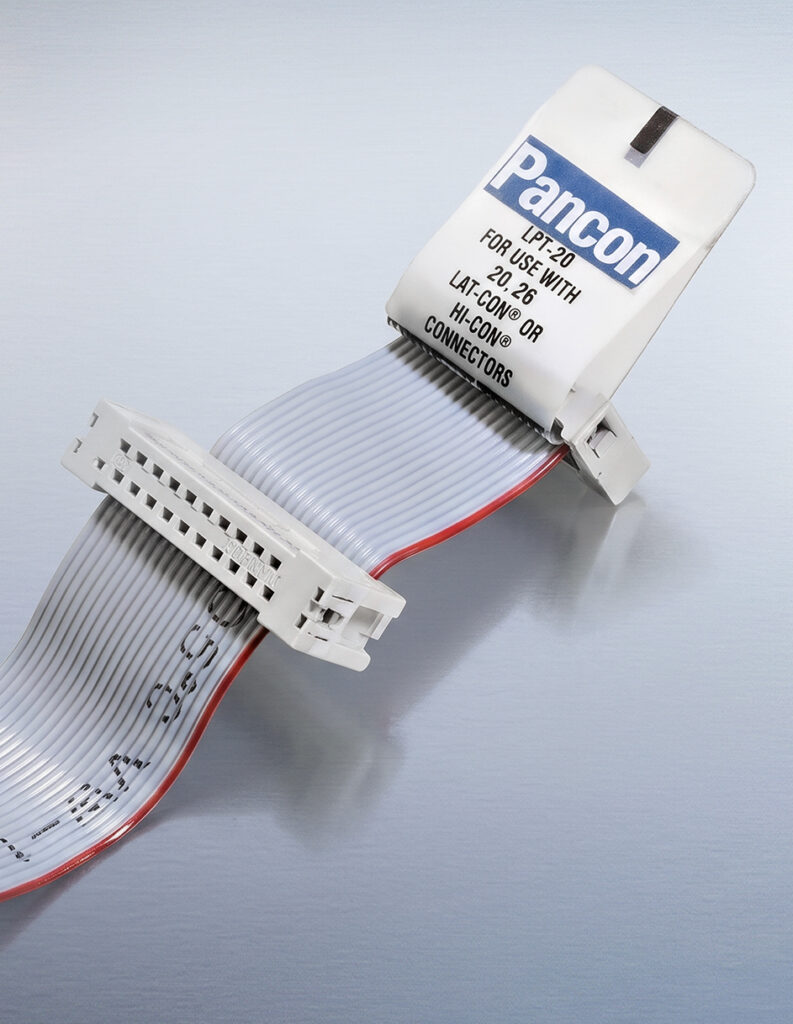
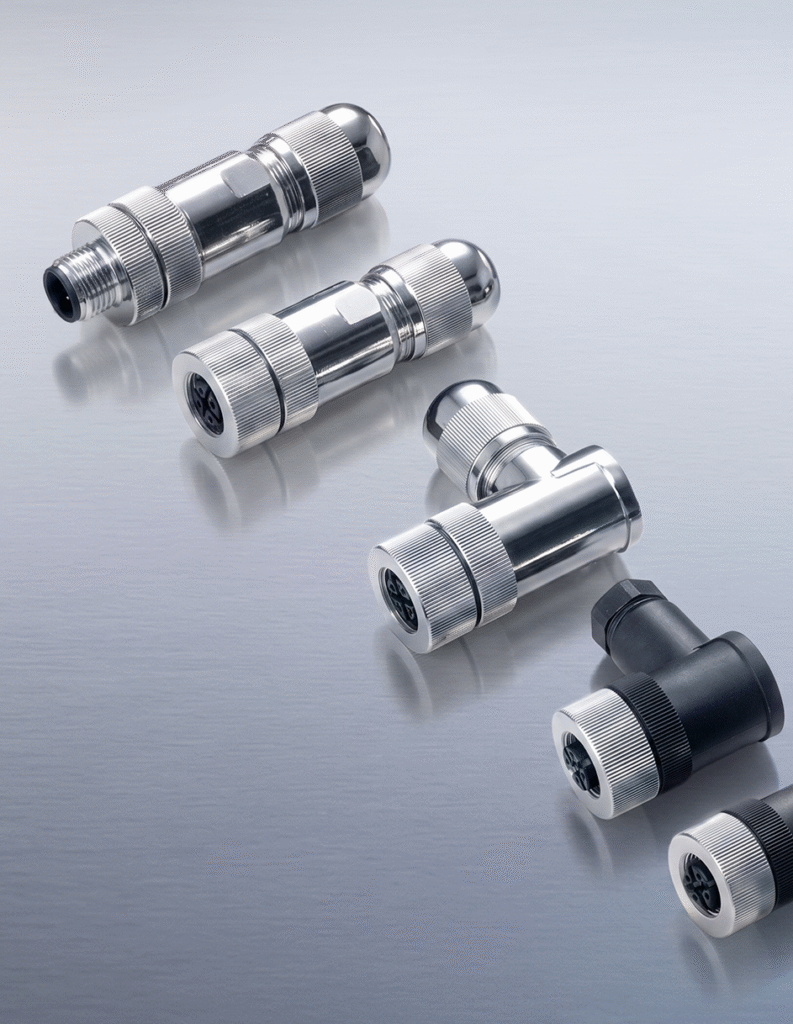
Connection systems for industrial automation, medical technology, measurement and control technology, automotive, etc.
- IDC connector technology, insulation displacement technology for fast, secure, and rational connection technology
- for ribbon cable technology with lateral entry
- for printed circuits
Cable tie
and fixing
elements
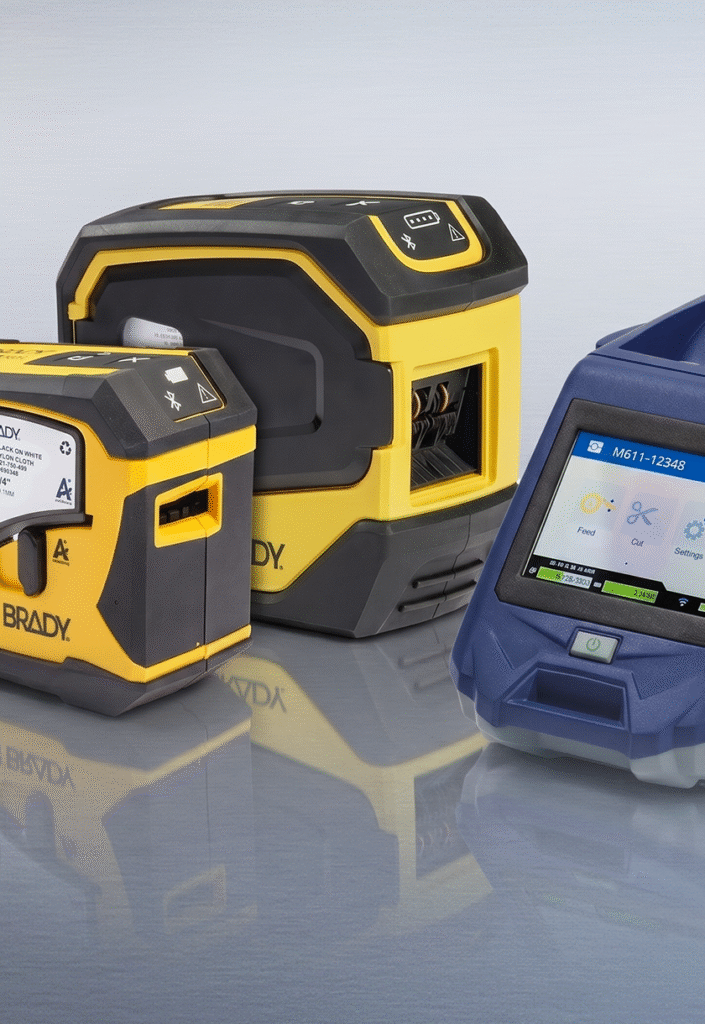
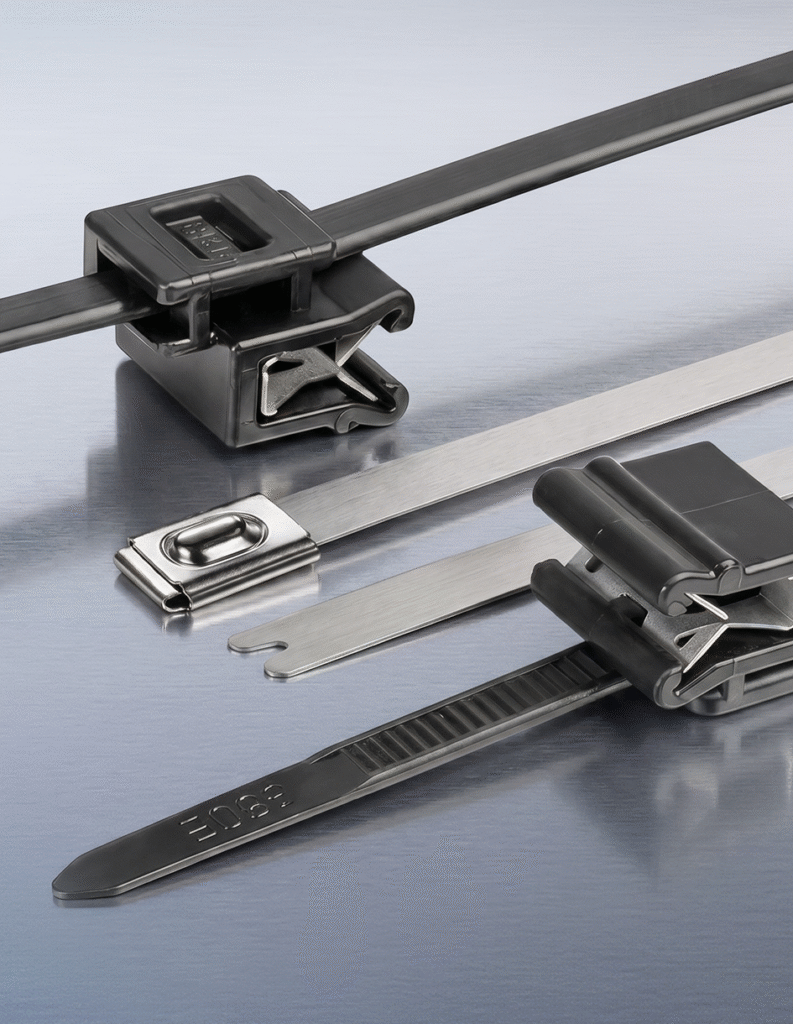
Cable ties and fasteners for various applications involving bundling, securing and labelling:
- UV- and weather-resistant
- halogen-free
- reversible
- UL and CSA approval, VG, MIL, and many more.
- heat-stabilised
- TEFZEL binders up to 260 °C
- EDGE CLIP for edge fastening
- Stainless steel cable ties with tensile strengths of up to 4,000 N
Crimp terminals
and connector
Cable lugs and connectors, both insulated and uninsulated, form part of our standard range.
- Ring shape in accordance with DIN 46234, pin shape in accordance with DIN 46230, fork shape
- Ring shape in accordance with DIN 46237, pin shape in accordance with DIN 46231, fork shape
- Butt, parallel and end connectors
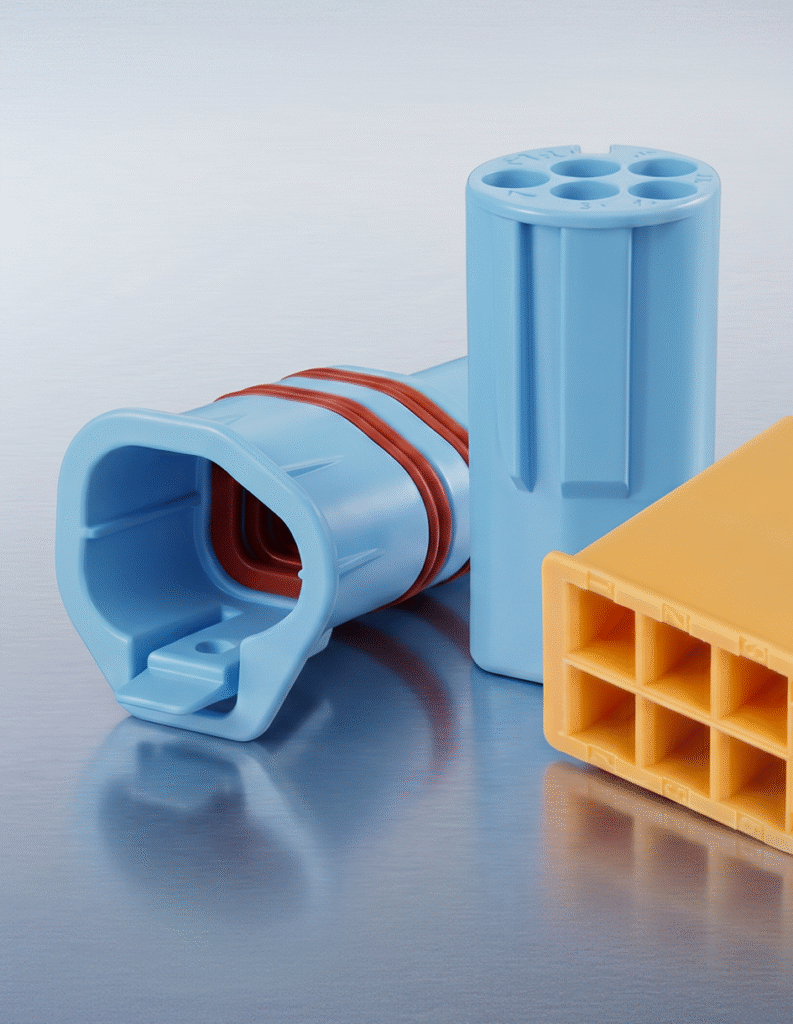
Crimp contacts,
Connector
and casing
FAQ: Frequently Asked Questions
to crimp terminals.
In their manufacturing, how do crimp terminals differ from compression terminals?
Crimp terminals are formed from copper sheet and subsequently soldered, resulting in their characteristic solder seam. Compression terminals, on the other hand, are made of a tube and are manufactured without a solder seam.
Which conductor classes are suitable for crimp terminals?
They are suitable for multi-core, fine and superfine conductors of classes 2, 5 and 6 – but not for single-core solid conductors of class 1.
What safety standards apply to crimp terminals?
In addition to DIN standards such as 46234 and 43237, international standards like IEC 61238-1 apply. These include tensile tests, ageing tests, and high-current tests, among others.
What is a „white fracture“ in crimped cable lugs?
„White fracture“ describes cracks in plastic insulation, caused by an incorrect combination of cable lug, conductor and crimping tool, or by inferior materials. It reduces electrical safety.
How long do crimp connectors last?
When installed correctly and used in standard environments, crimp terminals are extremely durable. Additional protective measures such as heat shrink tubing can further increase their lifespan.