
Heat shrink tubing, connectors
and mouldings – Protection & Insulation
at the highest level.
Shrink-fitting
secure cable connections.
Heat shrink tubing, heat shrink connectors, and heat shrink moulded shapes are essential aids in electrical installation and cable assembly.
They provide reliable insulation, sealing and mechanical protection – for new installations and repairs alike.
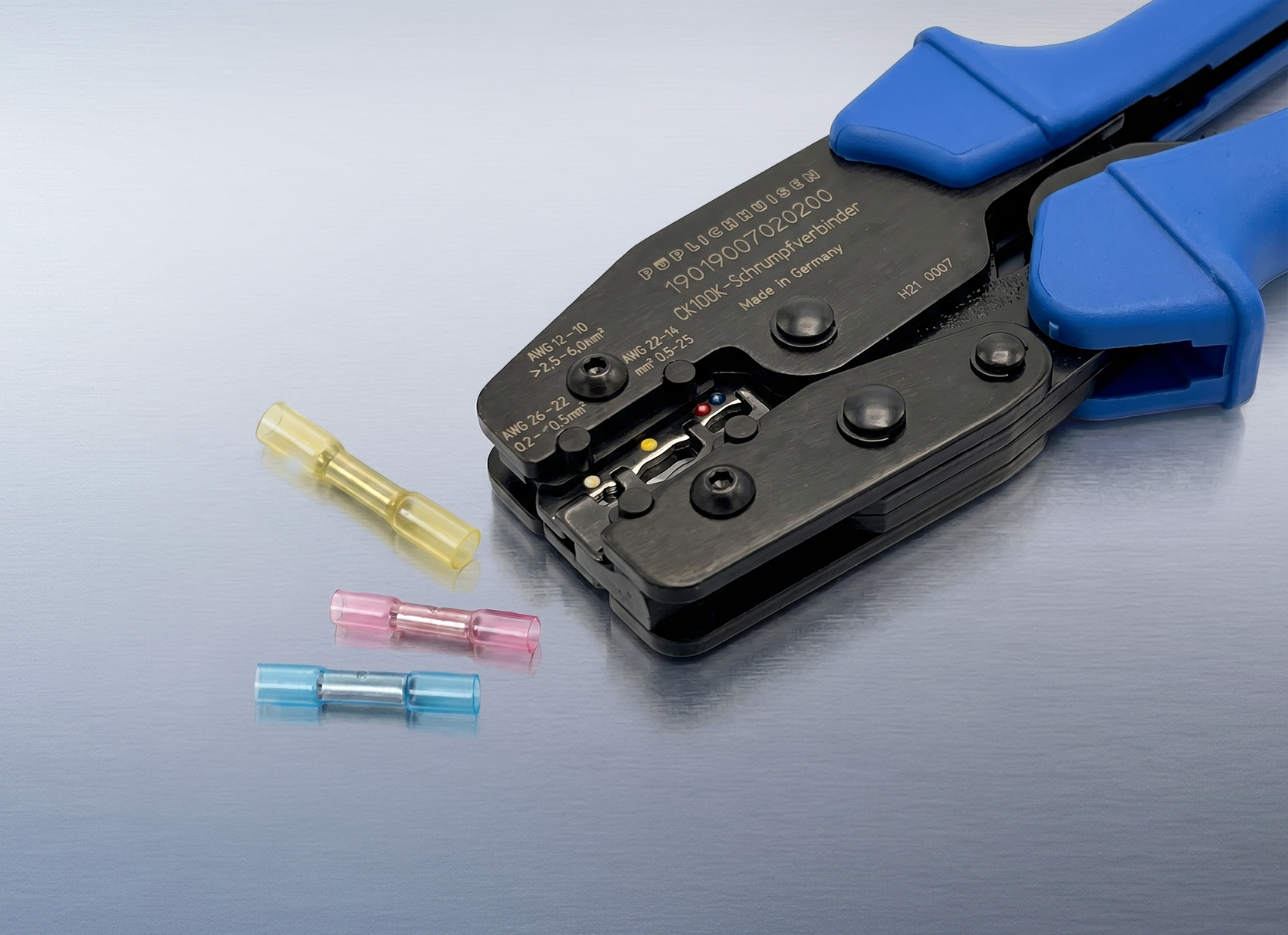
Advantages and benefits of heat shrink tubing
and heat shrink connectors.
- Electrical Safety High dielectric strength and reliable insulation
- Mechanical protection: Cable protection, strain relief, and stabilization
- Permanent seal Protection against moisture, dust, oil and chemicals
- Space-saving Close-fitting and compact after shrinking
- Bunt A wide selection of coloured heat-shrink tubing is available for marking.
- Versatile Suitable for cable repairs, retrofits, and new installations
Materials and Properties
of heat shrink tubing.
Heat shrink tubing is mainly made of thermoplastic materials, which contract when heated and reliably enclose cables and connections. Different materials are used depending on the application:
- Polyolefin – most widespread, flexible, durable, resistant to chemicals and UV radiation
- PTFE (Teflon) – extremely heat-resistant and chemically resistant, but more expensive
- Kynar (PVDF) – resistant to chemicals and high temperatures
- Elastomers – particularly flexible, oil and fuel-resistant, frequently used in the automotive industry
In addition, additives can be used to specifically adjust properties, for example, flame retardants, internal hot-melt adhesives for better sealing, or UV stabilizers for outdoor use.
Heat shrink tubing – as
Universal cable protector.
Heat shrink tubing is usually made of polyolefin and shrinks tightly around cables and connections when heated. It is available in different shrink ratios (e.g., 2:1 or 3:1) and wall thicknesses.
Areas of application
- Electrical insulation of cables and wires
- Coloured identification and marking
- Protection against moisture, oil and chemicals
- Reinforcement of cable ends and plug connections
Optionally, there are halogen-free, UV-resistant, and flame-retardant variants according to international standards.
Heat shrink tubing and
Heat shrink connector – connection
and sealing in one.
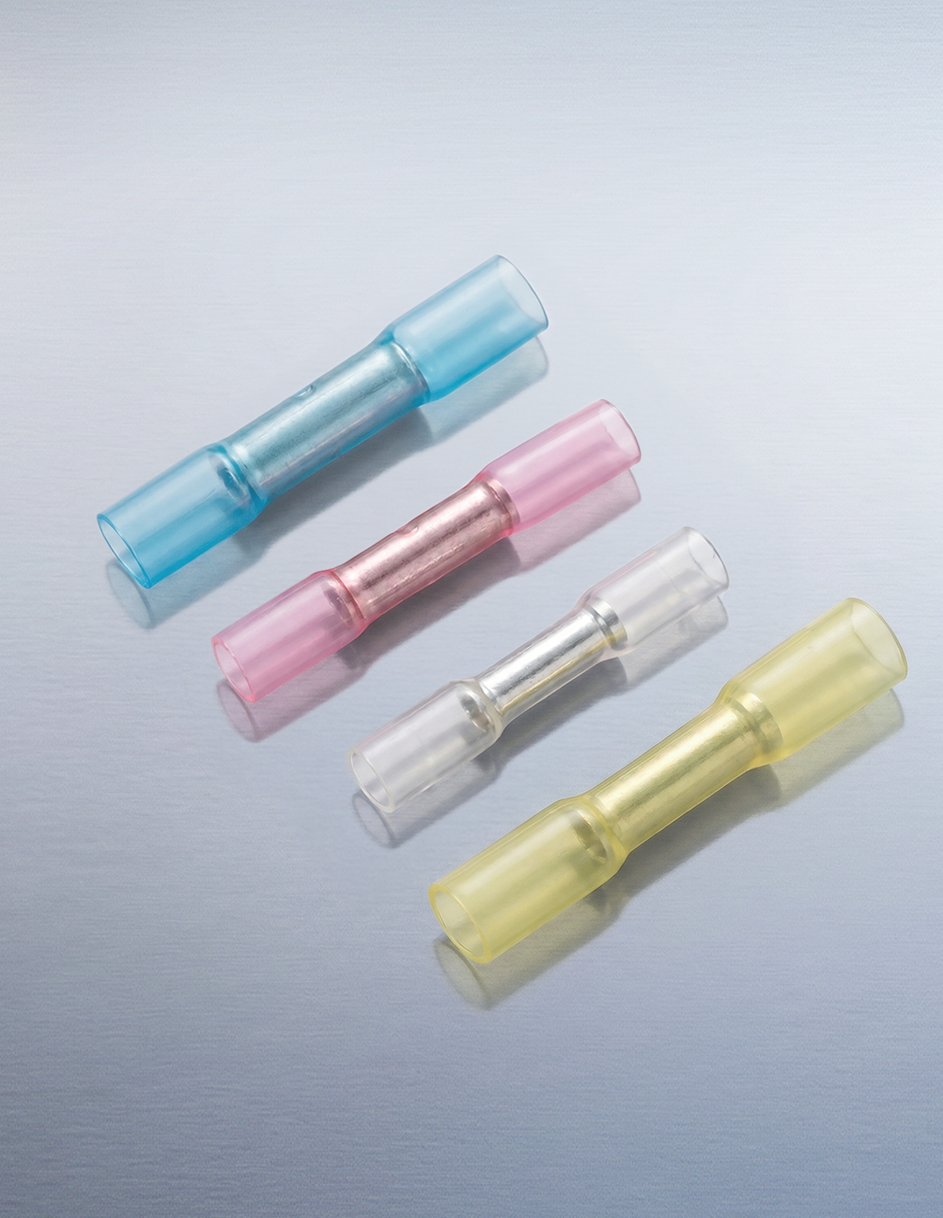
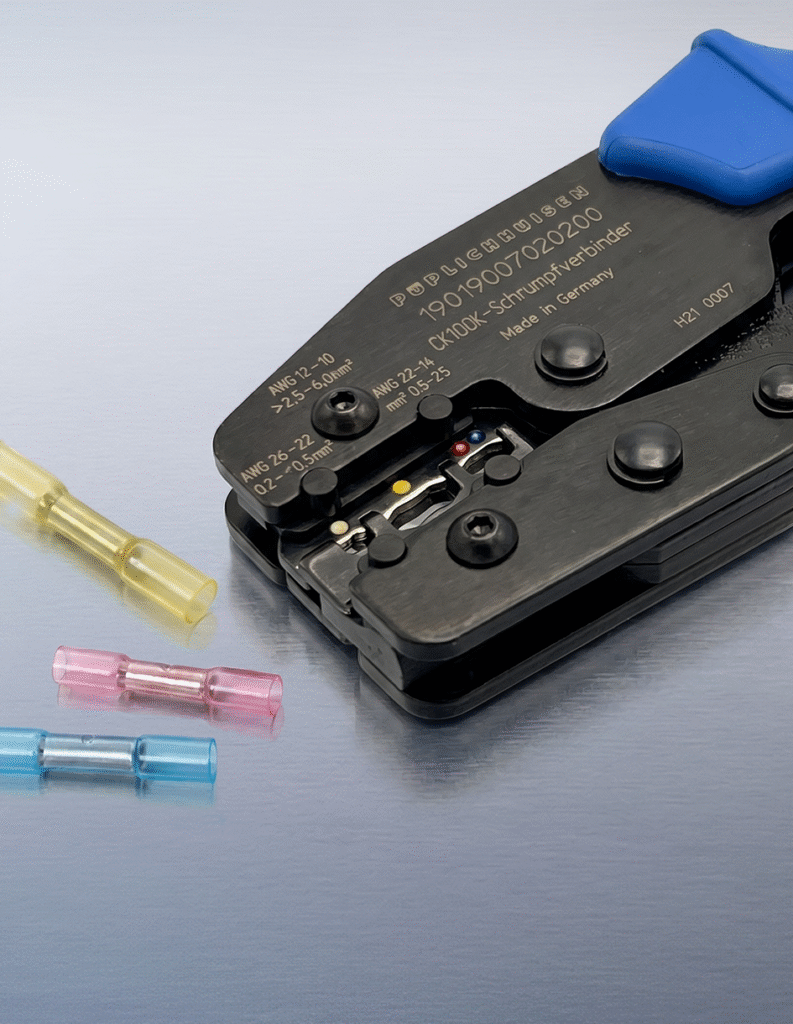
Heat shrink connectors combine electrical contacting with simultaneous insulation and sealing. They have an internal hot-melt adhesive layer which provides reliable protection when heated.
Types of heat shrink connectors:
- Impact connector to extend cables
- Parallel connector for parallel conductor connections
- Ring & Fork Connectors for screwed connections with shrink insulation
These connectors are particularly popular in automotive engineering, shipbuilding, and outdoor installations, where moisture protection and durability are crucial.

Shrink moulding
bespoke solutions.
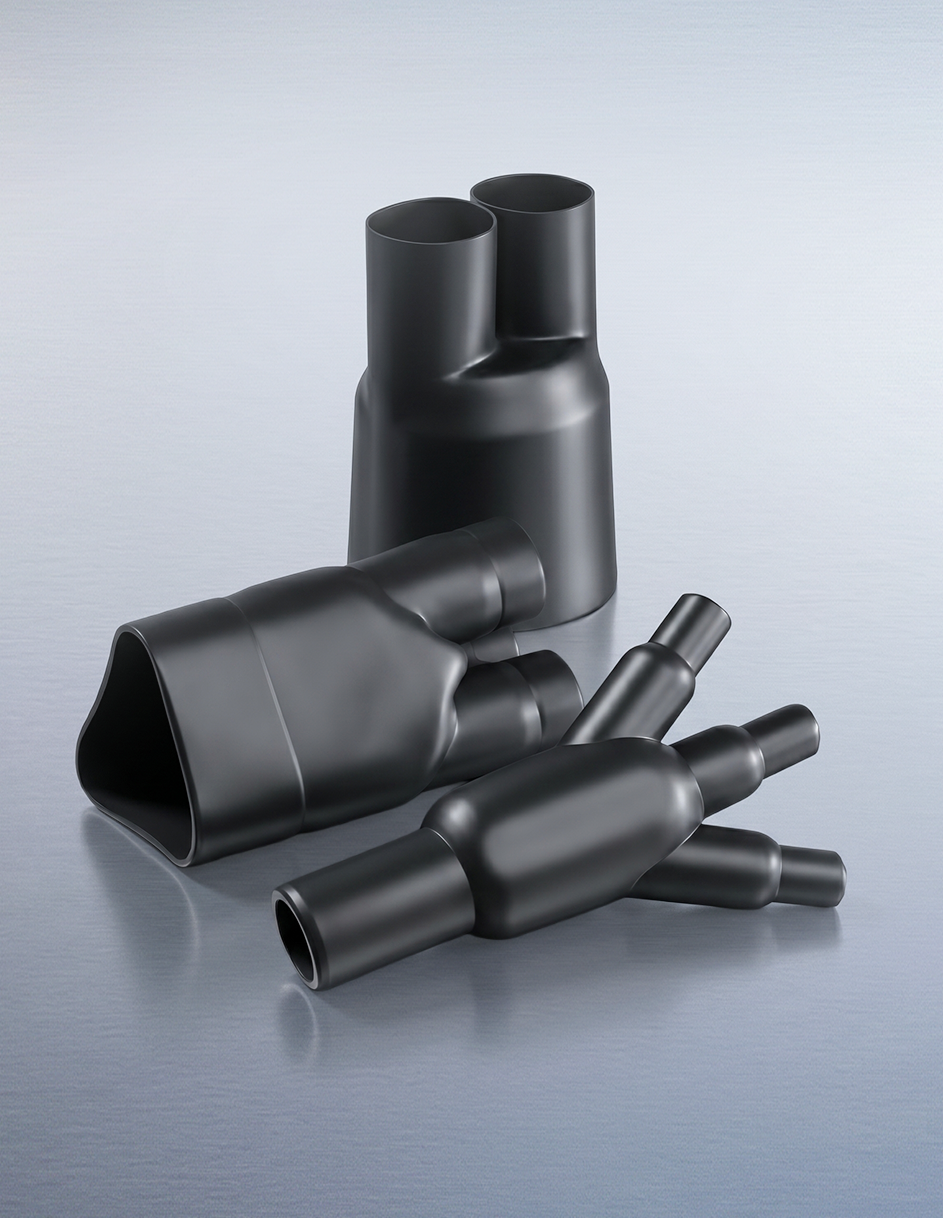
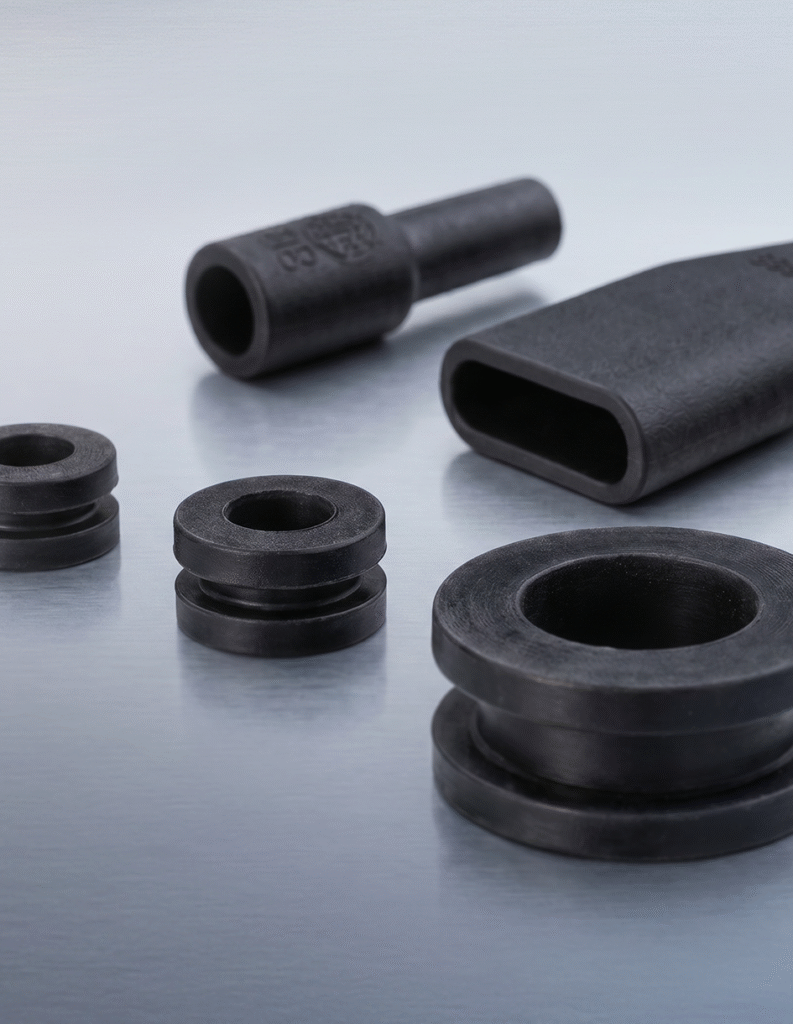
Shrink mouldings are pre-formed components like end caps, grommets or branch pieces that reliably protect sensitive cable areas.
Examples
- End caps: secure termination of cable ends
- Seals & Grommets: Sealing Cable Entries
- Branching pieces: protection of cable branches and wiring harnesses
Particularly in the automotive, aerospace and mechanical engineering industries, heat-shrink moulded parts offer a standard-compliant solution for complex cable systems.
Suitable processing tools
for heat shrink tubing.
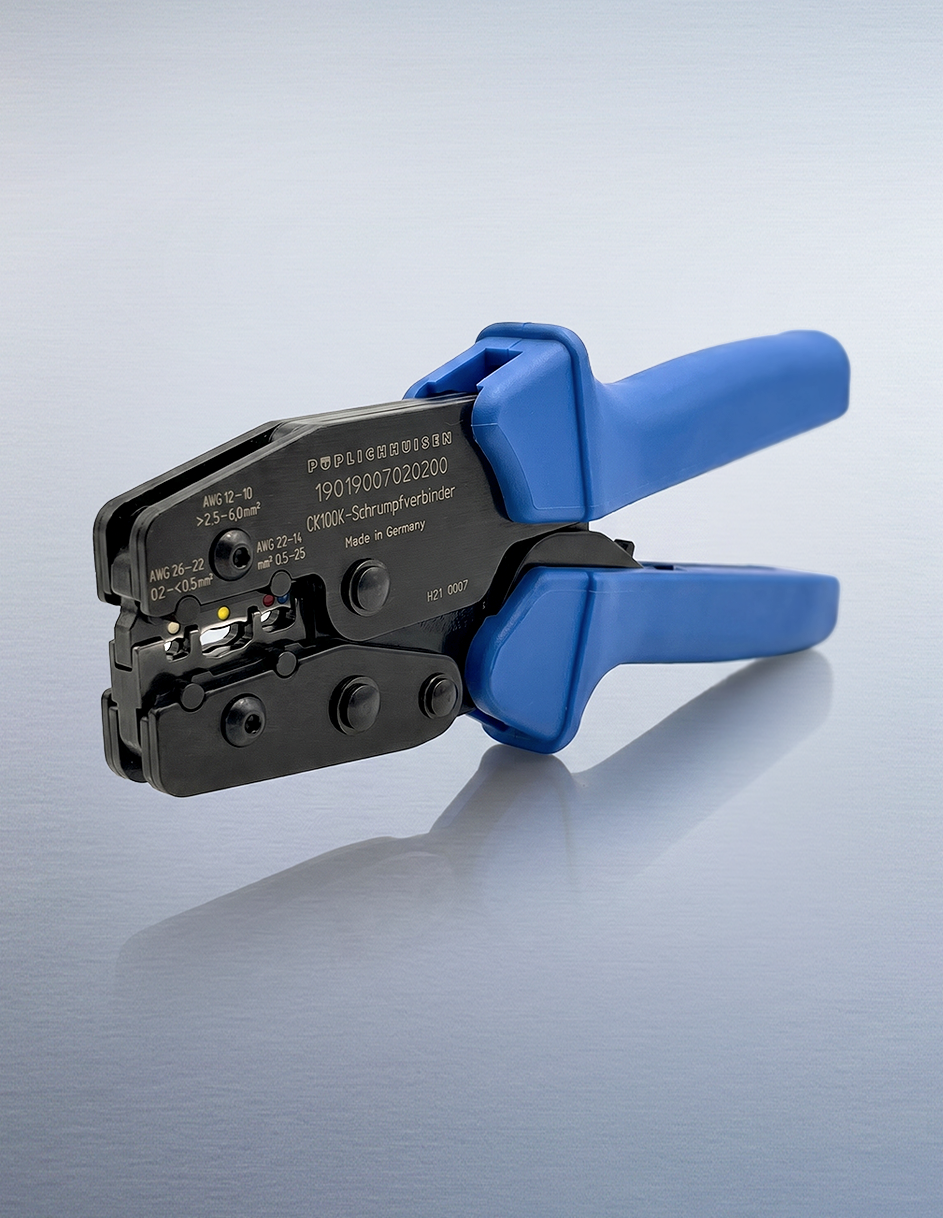
For the professional processing of heat-shrink tubing, various tools are available:
- Cut the hoses to the required length
- Shrink with the hot air blower for individual applications
- Shrink tunnel for efficient batch and mass processing
- Correctly cut heat-shrink tubing, which are delivered ready for immediate use
At Püplichhuisen, you’ll find not only heat-shrink tubing in a wide range of materials and designs, but also the right tools to go with them. Our experts will advise you on your selection, and we’ll recommend the most suitable solutions straight away.
Our Partners.
When it comes to distribution, we deliberately focus on a curated brand portfolio, reliably tested quality and in-depth technical expertise, ensuring that components are available quickly and integrate seamlessly into your applications. The range extends from connectors, crimp contacts and ferrule sleeves, through cable protection and marking, to fastening technology, assembly tools and interfaces for automation – all efficiently sourced from a single supplier and reliably implemented.
























Our
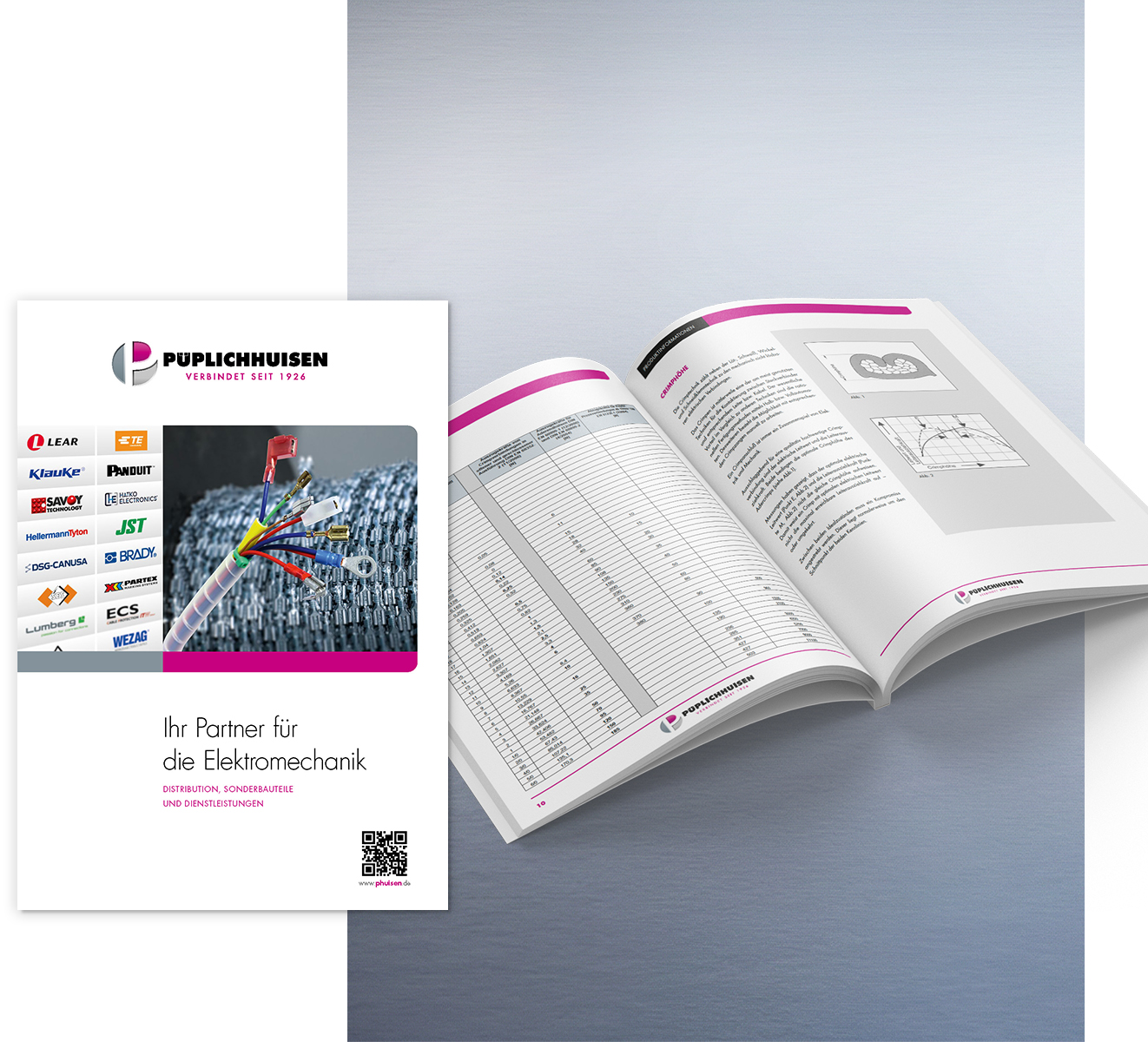
Product catalogues.
All product catalogues, series overviews and data sheets from Püplichhuisen in one place – always up to date. With technical specifications, standards and ordering information as PDFs for direct download. Ideal for purchasing, development and production.
Your path to becoming a distributor
for heat shrink tubing,
Connectors and fittings.
Whether you need cable insulation, moisture-proof connections or a precise fit for branch connections – at Püplichhuisen you’ll find high-quality industrial-grade heat-shrink tubing, heat-shrink connectors and heat-shrink moulded parts.

All product groups.

Electronics
Connectors and
Connector
system
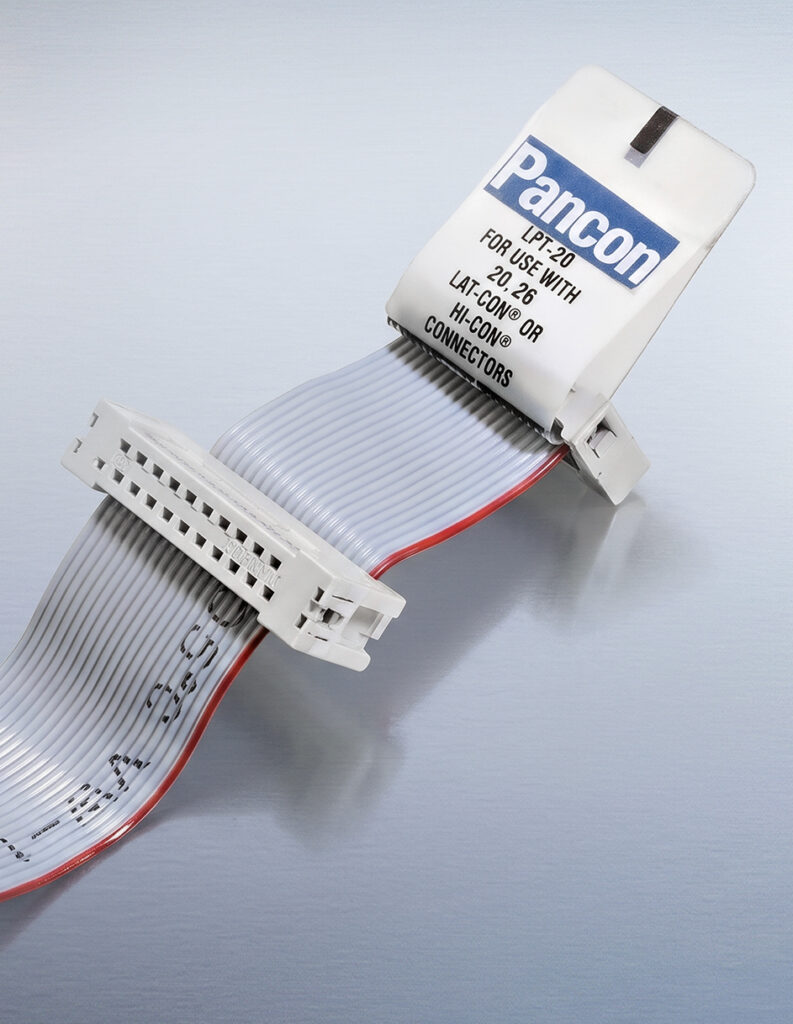
Connection systems for industrial automation, medical technology, measurement and control technology, automotive, etc.
- IDC connector technology, insulation displacement technology for fast, secure, and rational connection technology
- for ribbon cable technology with lateral entry
- for printed circuits
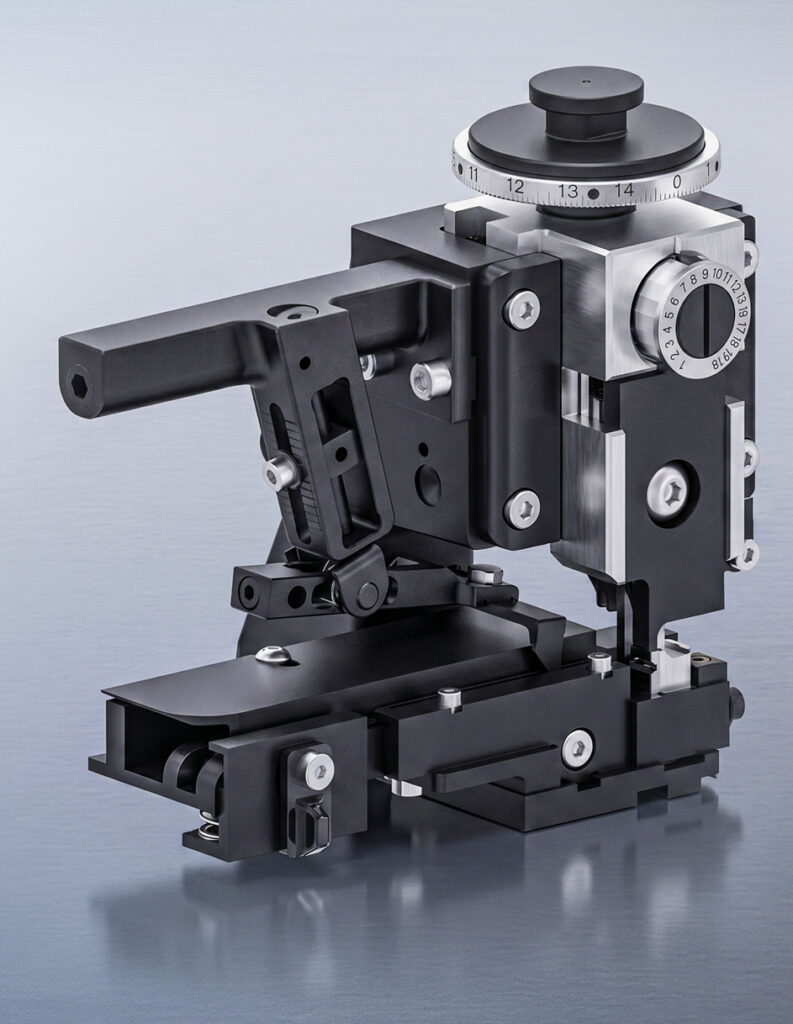
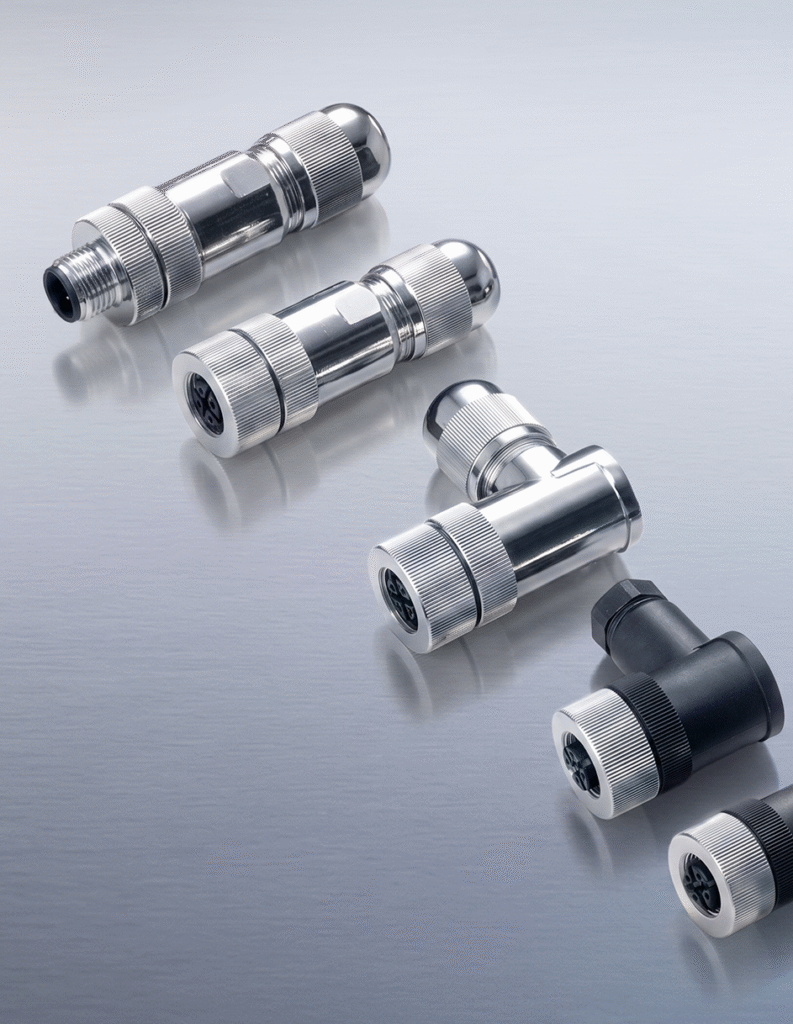
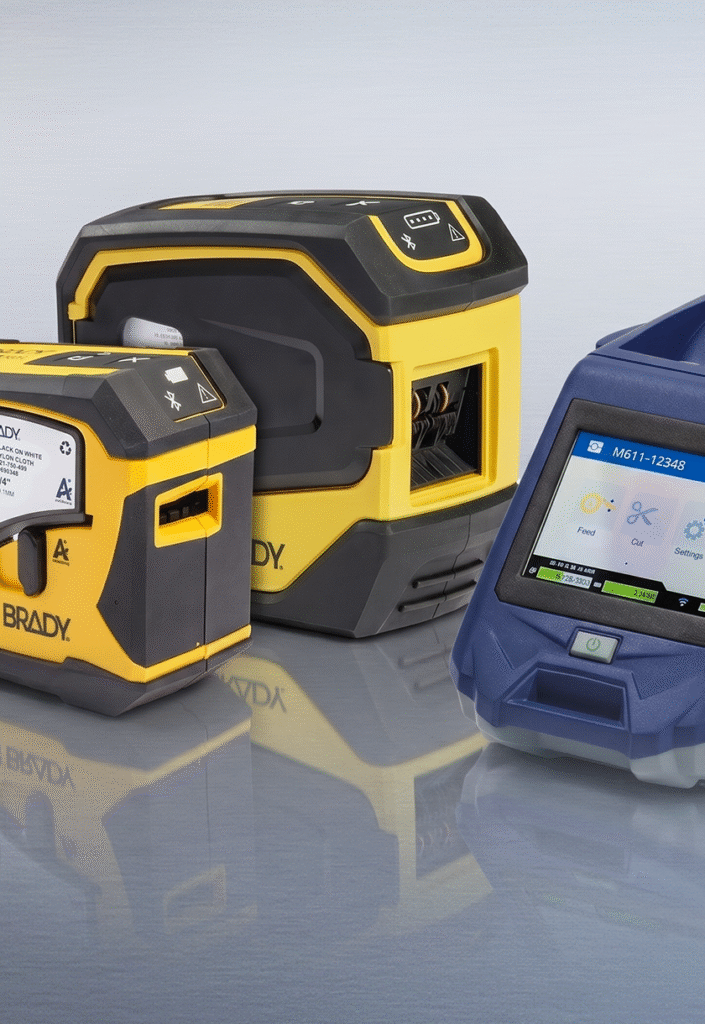
Cable tie
and fixing
elements
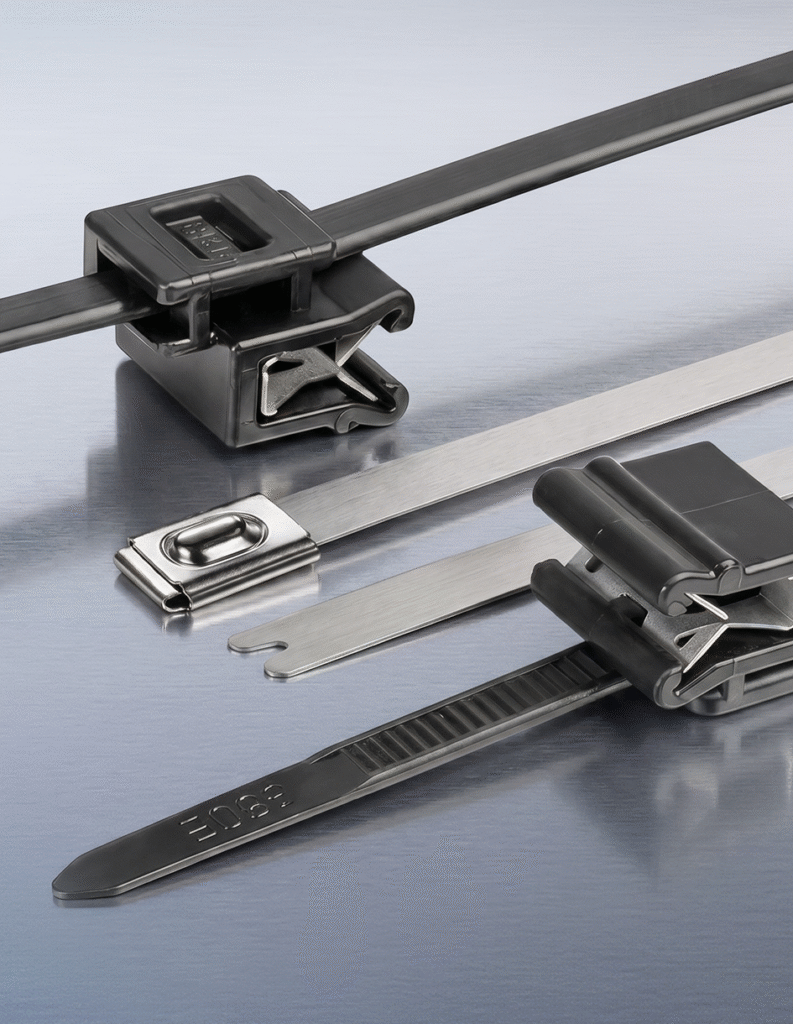
Cable ties and fasteners for various applications involving bundling, securing and labelling:
- UV- and weather-resistant
- halogen-free
- reversible
- UL and CSA approval, VG, MIL, and many more.
- heat-stabilised
- TEFZEL binders up to 260 °C
- EDGE CLIP for edge fastening
- Stainless steel cable ties with tensile strengths of up to 4,000 N
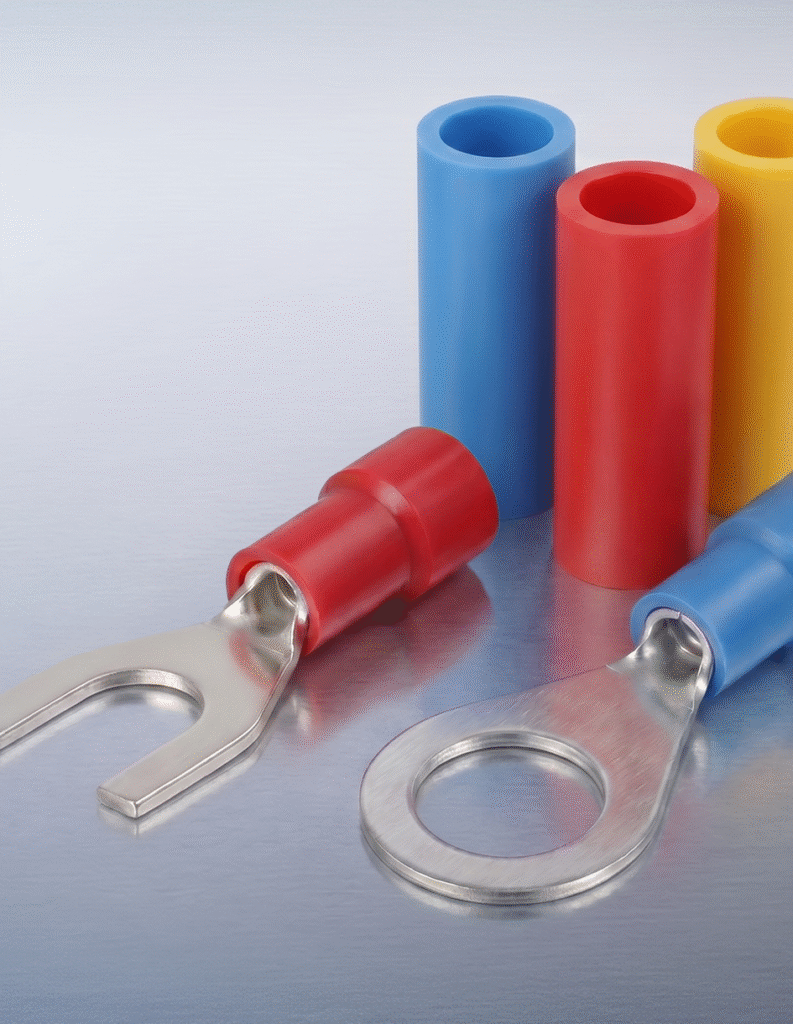
Crimp terminals
and connector
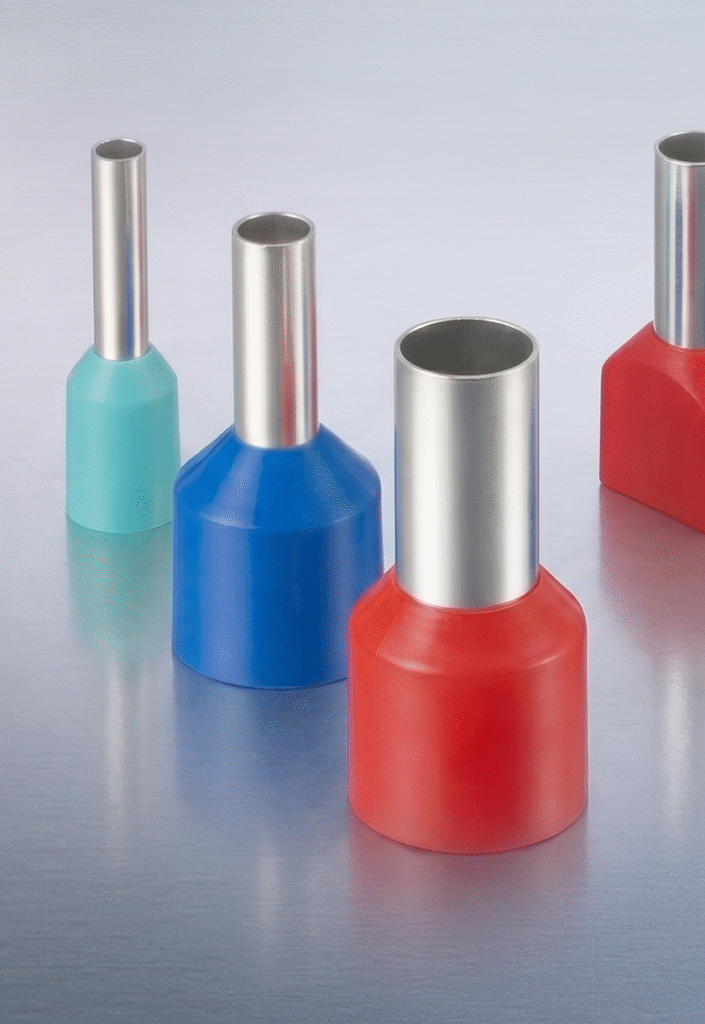
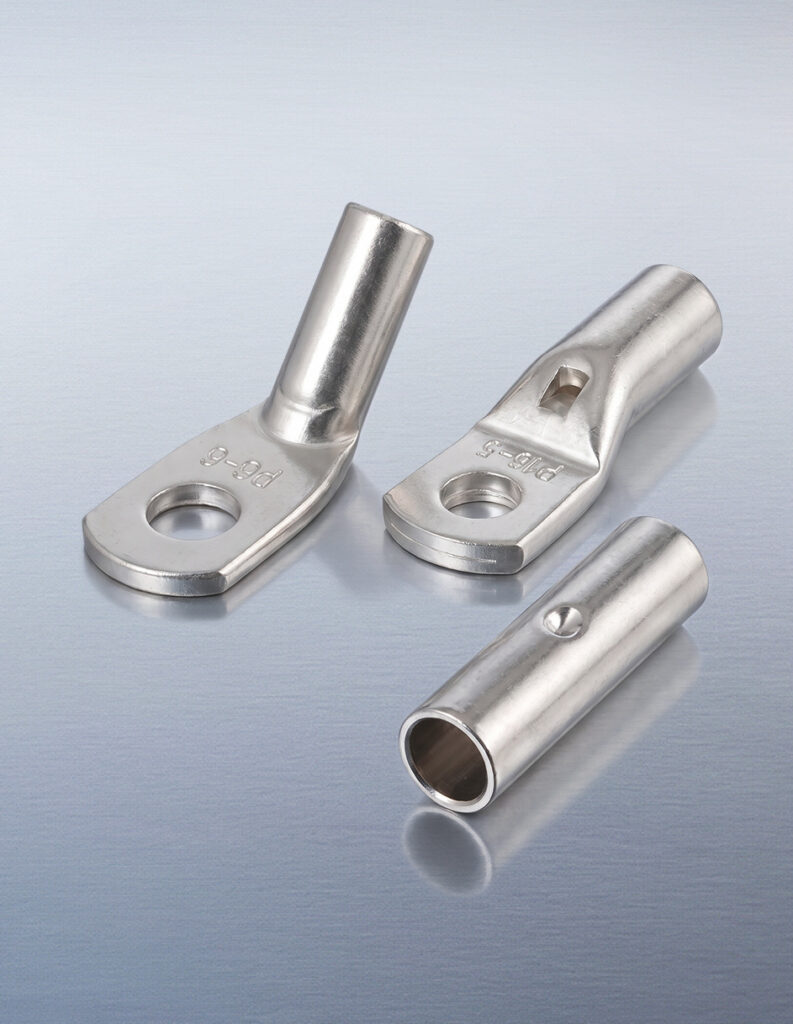
Cable lugs and connectors, both insulated and uninsulated, form part of our standard range.
- Ring shape in accordance with DIN 46234, pin shape in accordance with DIN 46230, fork shape
- Ring shape in accordance with DIN 46237, pin shape in accordance with DIN 46231, fork shape
- Butt, parallel and end connectors
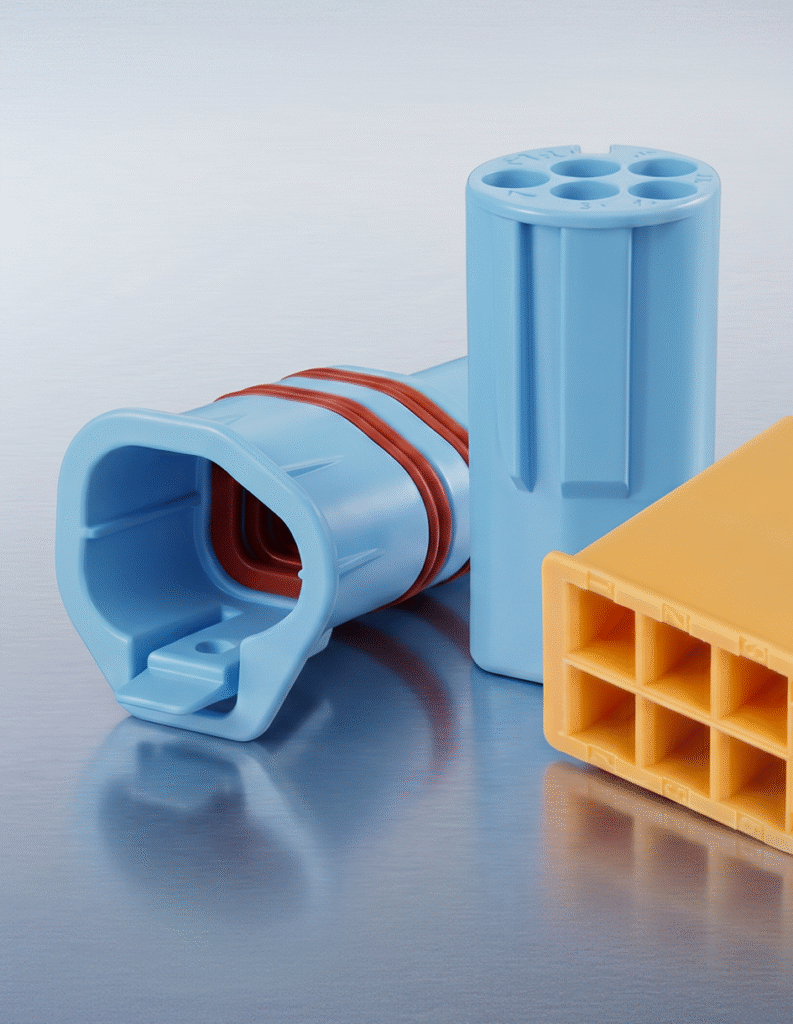
Crimp contacts,
Connector
and casing
FAQ: Frequently Asked Questions
heat shrink tubing,
and connectors and fittings.
What does the shrinkage ratio mean?
The shrink ratio describes how much a tube or fitting can shrink when heated. A ratio of 3:1, for example, means the diameter is reduced to one third.
Are heat shrink tubes always flame retardant?
Not all heat shrink tubing is automatically flame-retardant. However, there are UL and IEC certified variants that are self-extinguishing or halogen-free – ideal for safety-critical applications.
Shrink connectors are most commonly used in electrical applications for insulating and protecting cable splices and terminations.
Primarily in areas where moisture protection is important: automotive engineering, shipbuilding, outdoor installations, or industrial plants.
Are there heat shrink mouldings in custom designs?
Yes, in addition to standard products, custom shrink-formed parts can also be manufactured – for example, for special connectors or complex cable harnesses.
How long do heat shrink tubing and connectors last?
When used correctly, they offer a very long service life. High-quality materials retain their insulation and protective properties for many years, even under difficult environmental conditions.